
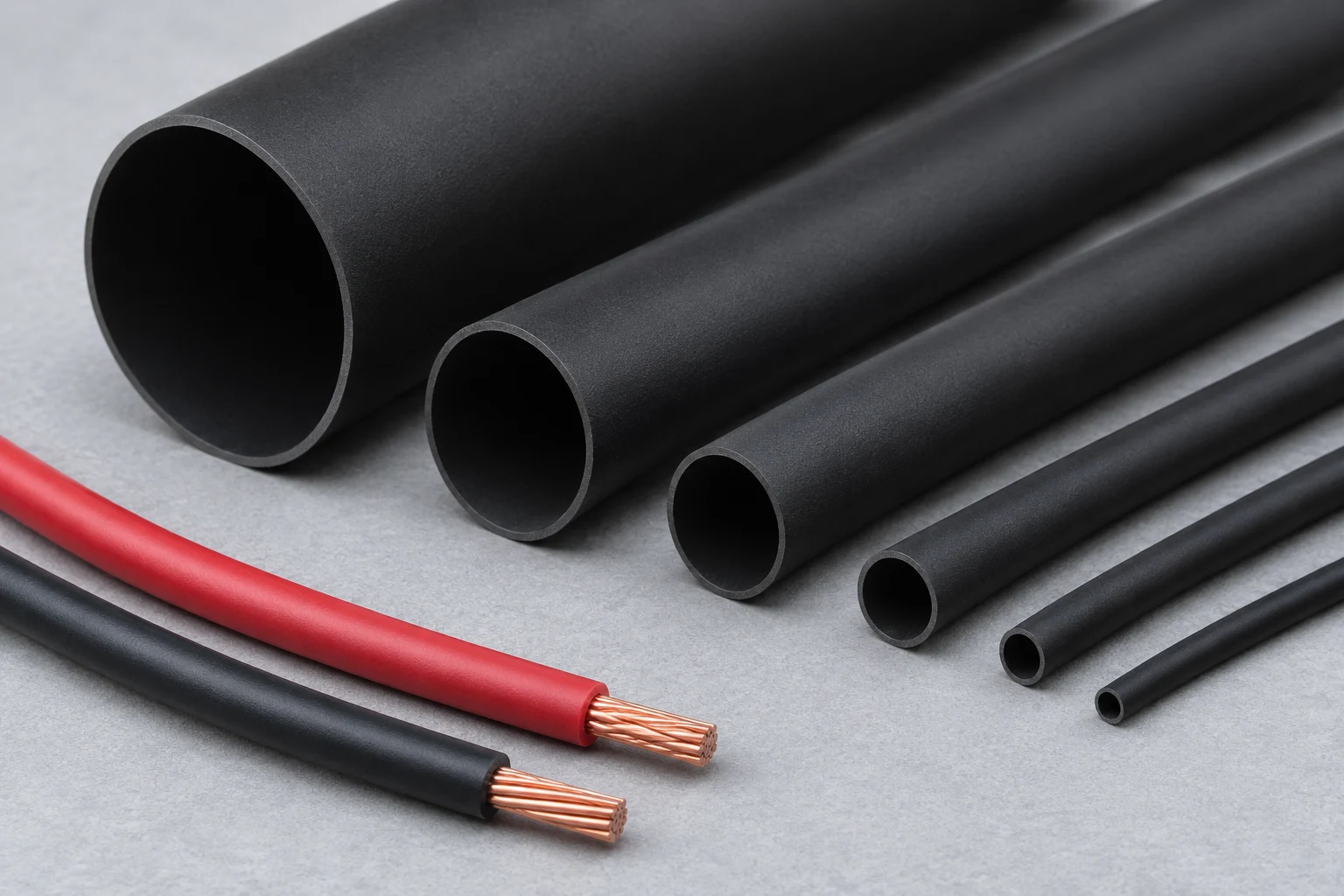
Choose heat shrink tubing that clears your assembly before heating and grips the smallest covered section afterward. Shrink ratio alone cannot confirm either fit. You also need material compatibility, finished coverage and an agreed installation method.
Which Dimensions Determine Heat Shrink Tubing Size?
You need both the installation envelope and the finished substrate dimensions.
Measure the largest feature that the unshrunk tube must pass over. Then measure the smallest section that needs coverage. Include component tolerances, splices and irregular bundle shapes in your review.
| Drawing Input | What You Check | Why It Matters |
|---|---|---|
| Largest installation feature | Connector, lug, splice or bundle envelope | The supplied tube must pass without forcing. |
| Smallest covered section | Actual outside dimensions, including tolerances | The tube must retain useful recovery capacity. |
| Finished coverage | Required position and overlap after heating | Cut length can change during recovery. |
| Available routing space | Finished outside diameter and local stiffness | The protected section must still fit its route. |
For a nonround feature, do not substitute wire gauge for physical measurements. Check the proposed sleeve on representative components.
How Do You Read Expanded And Recovered Diameter?
Use the specified diameter limits, rather than assuming every delivered tube matches its nominal size exactly.
Expanded inside diameter describes the opening before heating. Recovered inside diameter describes the free-recovered opening under the specified conditions. Installed tubing stops against your substrate before reaching that free-recovered dimension.
TE explains these limits in its tubing sizing guide. It also warns against stretching undersized tubing over components.
A basic dimensional screen requires clearance before recovery and contact afterward. Product-specific sizing margins still apply. Confirm them with the selected manufacturer’s instructions.
Why Can A Higher Shrink Ratio Still Fail?
A larger shrink ratio does not guarantee enough installation clearance or a suitable finished fit.
Consider a connector already fitted to a cable. A sleeve might grip the cable but fail to pass over the connector. Another sleeve might clear the connector but remain loose around the cable.
You may need a different tube size, assembly sequence or protection method. Loading the sleeve before connector assembly can resolve some clearance problems. Your drawing and work instructions must define that sequence.
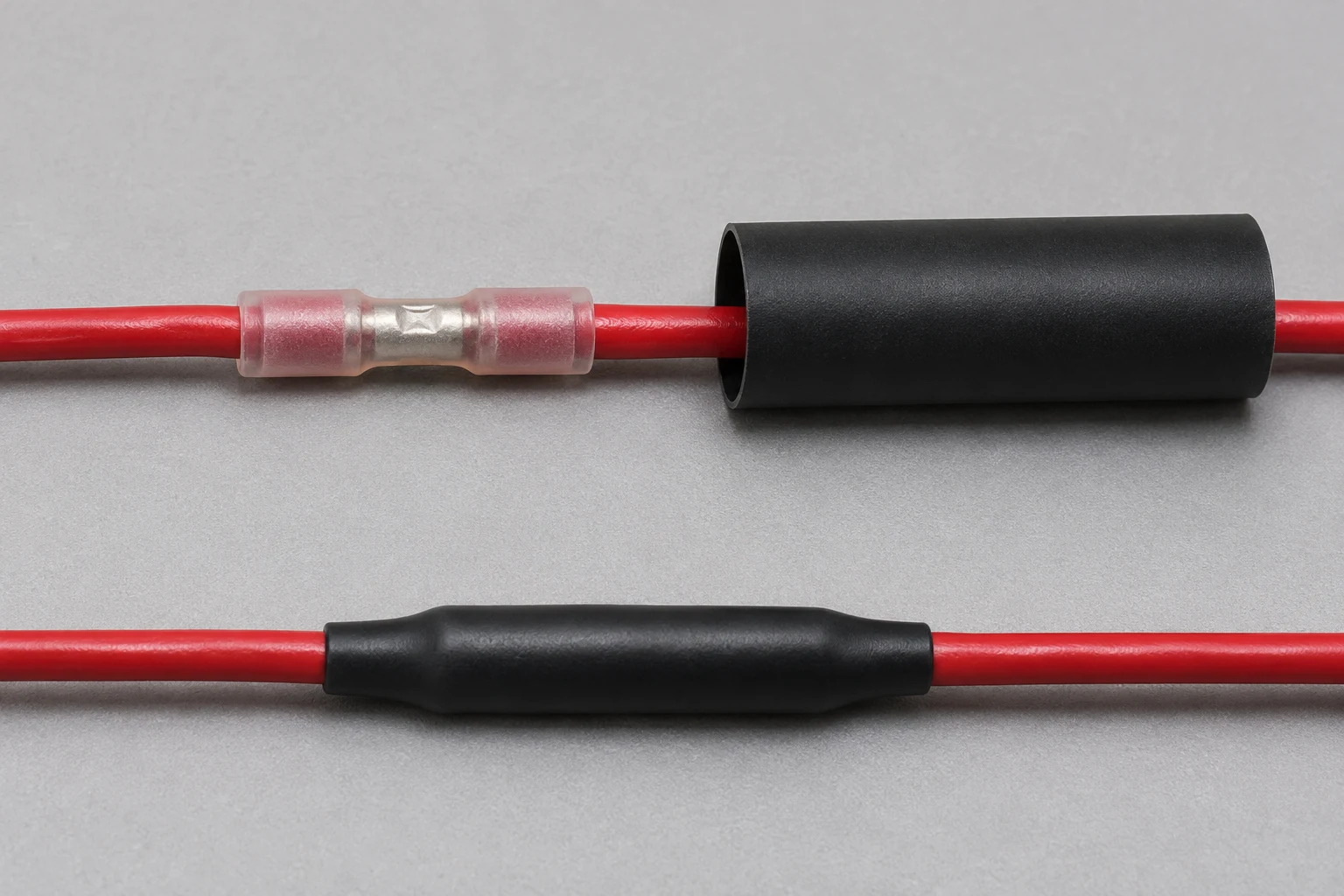
Do not treat a split sleeve as an equivalent replacement for an unsplit tube. Review its retention and protection requirements separately.
How Do You Specify Finished Coverage?
Specify the required coverage after recovery, then determine cut length from the selected product’s longitudinal change.
HellermannTyton lists a maximum 15% longitudinal reduction for its TA32-3/1 tubing. That limit belongs to this product, not every heat shrink tube.
For an illustrative calculation, suppose your required finished coverage is 30 mm. Assume the applicable product allows a 15% length reduction.
Starting length = 30 ÷ (1 − 0.15) = approximately 35.3 mm.
This calculation addresses length reduction only. It excludes cutting tolerances, placement variation and application-specific overlap. Add these through your drawing and validated installation process.
Measure coverage from defined reference points after cooling. Specify whether visible conductor, adhesive or terminal features may remain exposed.
Does Adhesive-Lined Tubing Make The Assembly Waterproof?
Adhesive-lined tubing alone does not establish a waterproof rating for your completed assembly.
You need compatible materials, suitable geometry and a defined installation process. Voids between bundle wires can create paths beyond the visible sleeve edge. Your acceptance method must address the actual joint.
For example, TE identifies HTAT as dual-wall tubing with an adhesive lining. That component description does not certify your complete harness.
When discussing a waterproof wiring harness, define the exposure and acceptance criteria. Avoid purchasing against the word “waterproof” alone.
What Should You Check During Installation Approval?
Approve a representative installed sample before freezing the tubing specification for production.
- Check part number, size, material and drawing revision.
- Confirm clearance through the actual assembly sequence.
- Inspect coverage, position, damage and incomplete recovery.
- Check adjacent insulation and components for heat damage.
- Confirm adhesive behavior when the selected product requires it.
- Verify finished routing clearance and local flexibility.
- Perform the agreed electrical or environmental checks.
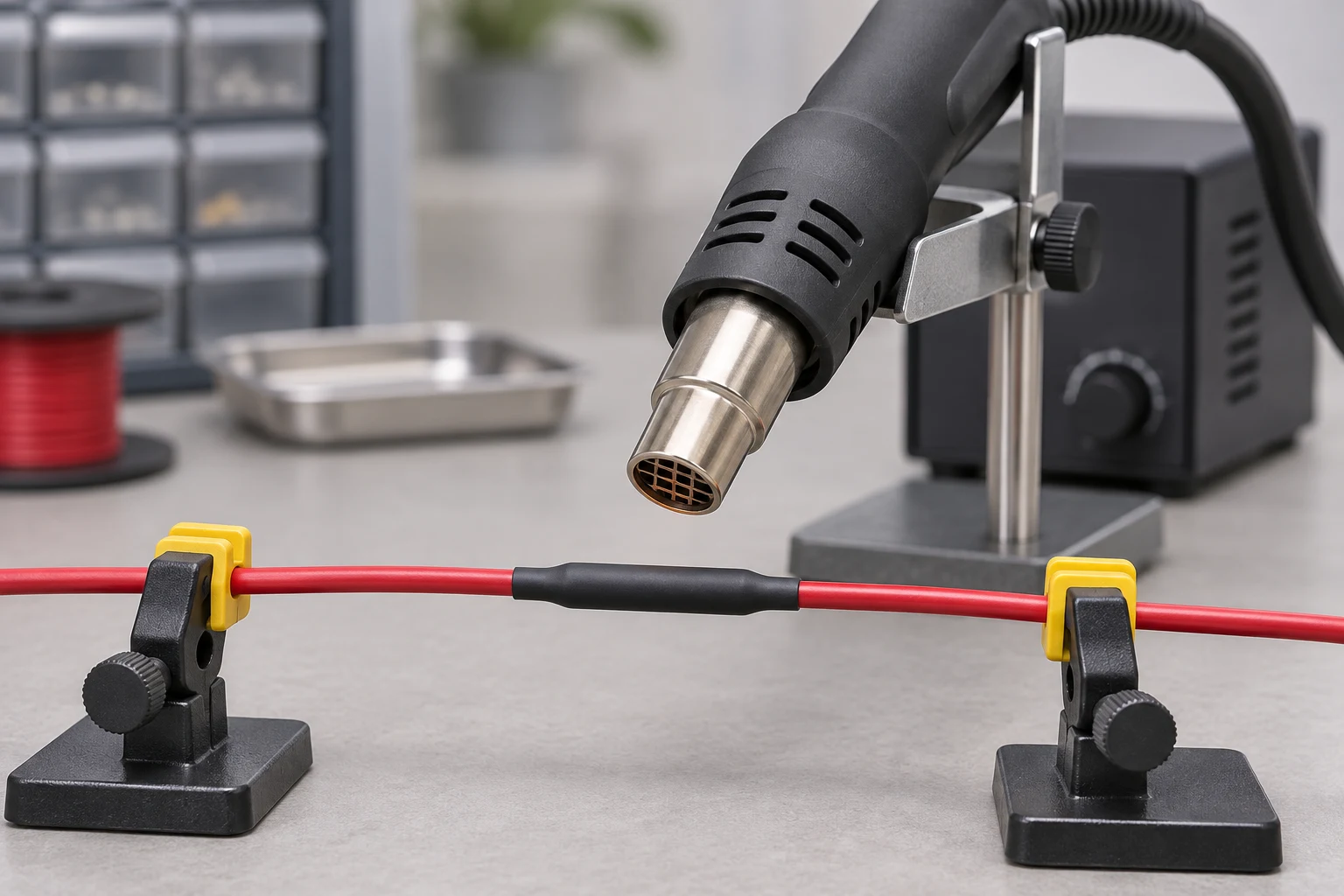
Use the manufacturer’s installation instructions to set heating conditions. A heat-gun setting alone does not describe the temperature reached by the joint.
Document tooling, heating method and inspection criteria. Keep your approved sample linked to the relevant drawing revision.
What Should Your Heat Shrink Assembly RFQ Include?
Send dimensions, component references and acceptance requirements together so your supplier can review the complete fit.
Include the tubing part number or approved material specification. Add connector and cable references, dimensional tolerances, coverage, operating exposure and quantity. Explain whether the tubing must pass over fitted components.
XSD lists wire preparation, connector assembly, protective processing and electrical inspection among its manufacturing capabilities. Your selected tubing, process and verification requirements need project review.
Use a prototype harness to confirm the installation before repeat orders. No standard tubing choice establishes a universal sealing or mechanical guarantee.
Your quotation can change with tubing material, approved sourcing, cut lengths and installation access. Special heating fixtures and added verification also affect the process. Request a project quotation instead of comparing sleeve price alone.
Heat Shrink Tubing Size Selection FAQ
Can You Choose Tubing From AWG Alone?
No. Measure the actual outside dimensions and the largest feature encountered during installation.
Should Expanded Diameter Equal Connector Diameter?
No. You need practical clearance, including component tolerances and geometry. Confirm fit without stretching the tube.
Is Shrink Ratio The Same As Finished Diameter?
No. The substrate limits recovery during installation. Check the specified expanded and free-recovered dimensions separately.
Can You Use One Size For Different Cable Diameters?
Possibly. Every configuration must remain within the selected manufacturer’s application guidance and your approved installation criteria.
Does Every Tube Shorten By 15%?
No. The example uses one named product’s limit. Read the longitudinal-change specification for your selected part.
Can Adhesive Replace A Connector Seal?
Do not assume interchangeability. Review the connector interface, materials and assembly acceptance requirements before changing the sealing design.
Can You Install Tubing After Termination?
Only when the supplied tube clears every feature along its installation path. Otherwise, review the assembly sequence.
What Must You Approve Before Production?
Approve the specified tubing, installed coverage, process instructions and inspection criteria on representative assemblies.
Confirm The Fit Before You Order
Check both installation clearance and finished recovery. Then confirm coverage, materials and process acceptance. Send your drawing and component list for review with sample quantity and expected production demand.