Components
List housings, contacts, seals and mating parts. Include approved sourcing and any substitution restrictions.
OEM PROGRAMS / BUILD-TO-PRINT
OEM Wire Harness & Cable Assembly Manufacturer
XSD Harness manufactures custom wiring harnesses and cable assemblies to your drawings, BOMs and approved requirements. Align the build before the first sample. Carry that definition into repeat production.
A MANUFACTURING PARTNER
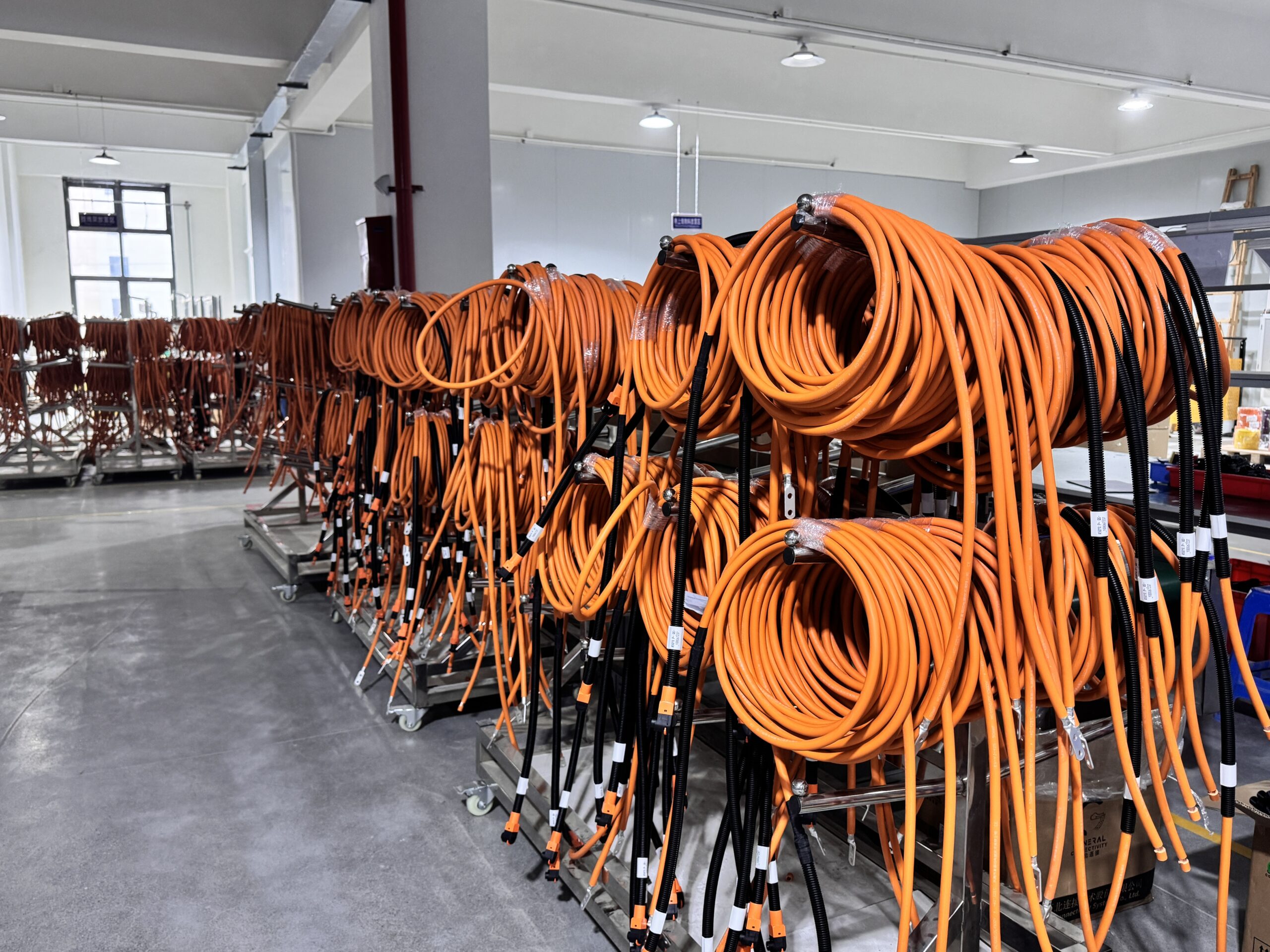
OEM wire harness manufacturing turns an equipment maker’s connection requirements into a finished assembly: wires, contacts, housings, branches, protection and identification.
The starting point is your approved design. XSD reviews the assembly route and manufacturing inputs with you, from wire preparation and termination to connector assembly and inspection.
For an existing product, send the current configuration and known problems. For a new program, identify the open decisions before requesting production-ready samples.
FROM RFQ TO REPEAT SUPPLY
Resolve the definition at each stage, rather than carrying open questions into the next order.
Drawing revision, circuit map, BOM, component sourcing and operating conditions.
A confirmed quotation scope and a list of open technical questions.
Fit, routing, connector access, branch dimensions and agreed inspection results.
Sample feedback and a record of the changes to approve.
Approved components, dimensions, labels, inspection criteria and packaging.
A production configuration identified by part number and revision.
Order quantities, forecasts, delivery requirements and proposed changes.
A shared basis for repeat orders and change review.
SPECIFICATION CONTROL
A connector name or a sample photograph is only part of the definition.
List housings, contacts, seals and mating parts. Include approved sourcing and any substitution restrictions.
Provide cavity assignments, wire colors and sizes, branch lengths, tolerances and connector orientation.
Define sleeving, tape, grommets, clips, strain relief and the exposure at each connection.
Identify the released documents and how changes will be reviewed, sampled and accepted.
MANUFACTURING SCOPE
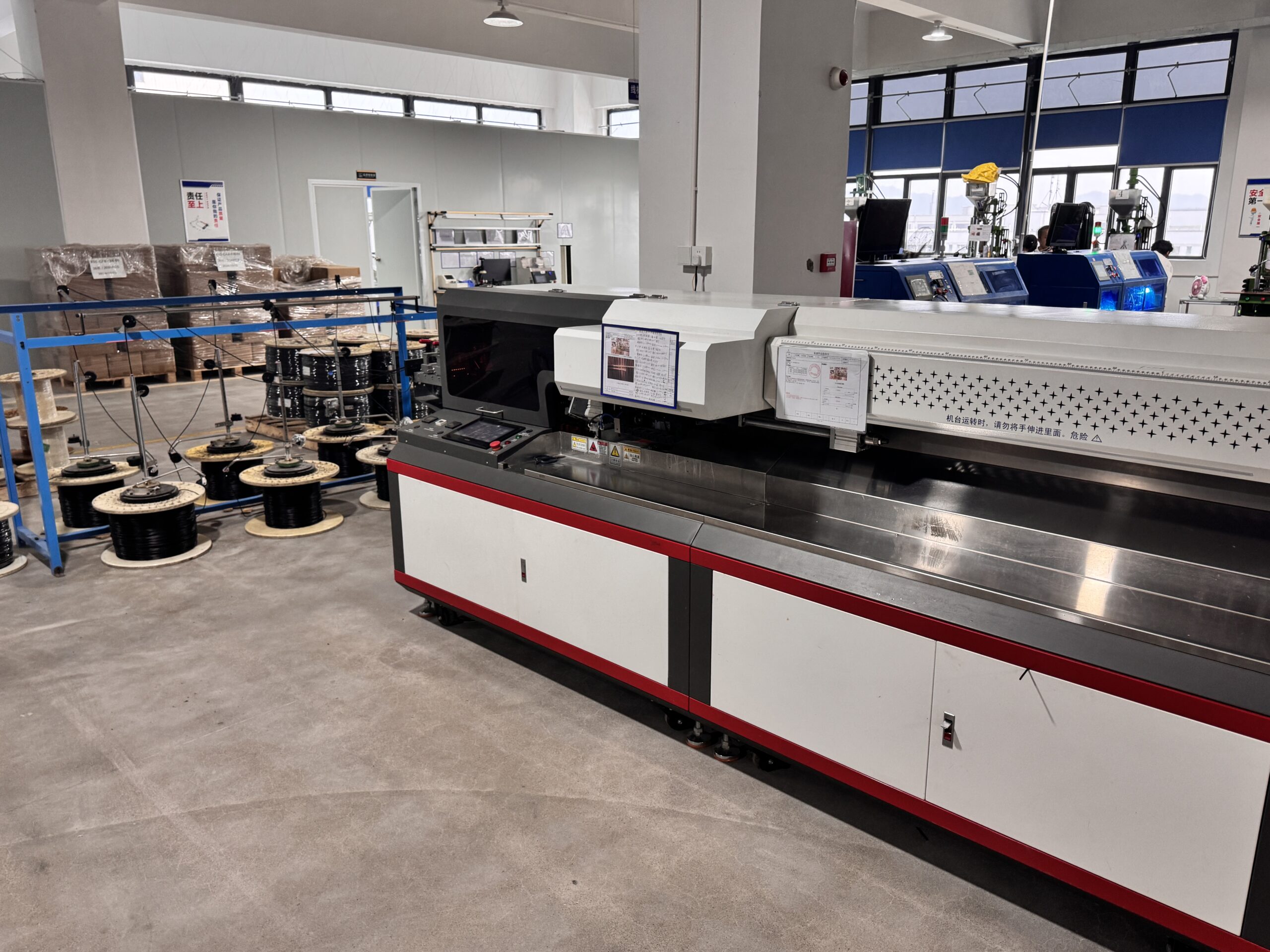
Wire cutting and stripping. Terminal crimping. Connector assembly. Selected soldering. Molding and protective processing. Harness routing and electrical inspection.
Your cable, contact system and installation requirements determine which operations are needed. Tooling, fixtures and special processes are reviewed for the selected design.
Explore Manufacturing Capabilities ↗
Company quality systems. Confirm product approvals and project documentation separately.
CONNECTIONS FOR YOUR EQUIPMENT
Start with the interface and installation. Then define the complete build.
Multi-branch wiring, internal routing and equipment connections.
Defined connector-to-connector power, signal and display connections.
Integrated strain relief and protective features for the approved design.
Review sealing, materials and exposure for the installation.
ACCEPTANCE BEFORE RELEASE
Agree what will be checked, how it will be measured and what constitutes a pass.
Dimensions, branch positions, connector orientation, labels and workmanship.
Circuit continuity, wire sequence and resistance against specified test points and limits.
Crimp pull force, retention or other checks where relevant to the assembly and agreed plan.
Environmental, high-voltage or signal tests require defined conditions, methods and a confirmed supply scope.
Include required inspection records, sample approval documents and any customer-specific submission package in your RFQ.
PROCUREMENT PLANNING
Separate one-time setup from repeat-order requirements.
Component availability, approved sourcing, tooling, fixtures, quantity and inspection scope affect the quotation. Share your sample schedule and expected production demand so these can be reviewed together.
Sample quantity · tooling · fixtures · technical review · approval requirements
Order quantities · forecasts · packaging · labels · delivery schedule · change process
For supplier transfers, include the existing revision, known deviations and any reusable tooling information. Confirm ownership, condition and compatibility before assuming equipment can be transferred.
OEM PROCUREMENT FAQ
An OEM wire harness is a group of wires, terminals, connectors and protective components made for an equipment manufacturer’s specified product. The drawing, BOM, circuit map and acceptance criteria define the assembly. It is a manufacturing relationship, not a universal connector type.
Yes. XSD reviews customer drawings, BOMs, wiring diagrams, specifications and samples for build-to-print manufacturing. Provide the current revision and identify any unresolved dimensions, component references or inspection requirements before sample release.
A sample can support a manufacturing review. It may not reveal conductor construction, material grades, electrical limits or internal connections. Agree the missing requirements and approval documents before treating the sample as a production definition.
Yes. Provide housing, contact, seal and mating-part references, along with wire compatibility and sourcing requirements. Proposed alternatives need your review and approval. Similar appearance does not establish interchangeability.
Prototype, pilot and repeat-build requirements can be reviewed. Use samples to check fit, branch routing, pinout and agreed inspection results. Release the approved configuration before placing repeat-production orders.
Quantity and timing depend on component availability, assembly complexity, tooling, inspection scope and the production plan. Send sample quantities, order quantities, forecast demand and required dates for a project-specific review.
The agreed plan can include visual and dimensional checks, continuity, wire sequence, resistance and selected mechanical checks. Define test points, methods, limits and required records. Environmental, high-voltage or signal-performance validation requires a confirmed scope.
No. XSD’s ISO 9001 and IATF 16949 company quality systems are distinct from product certification. State the market, application standard and required conformity documents in the RFQ so the exact scope can be checked.
Identify the part number and revision on the order. Compare proposed component, material, routing and inspection changes with the approved configuration. Agree the approval process and whether new samples are needed before implementing a change.
START YOUR OEM PROGRAM
Share your drawing, BOM or sample information, together with quantities and the intended application.
XSD Harness is the specialized wire harness and cable assembly business of Dongguan XSD Cable Technology Co., Ltd., Dongguan, China.