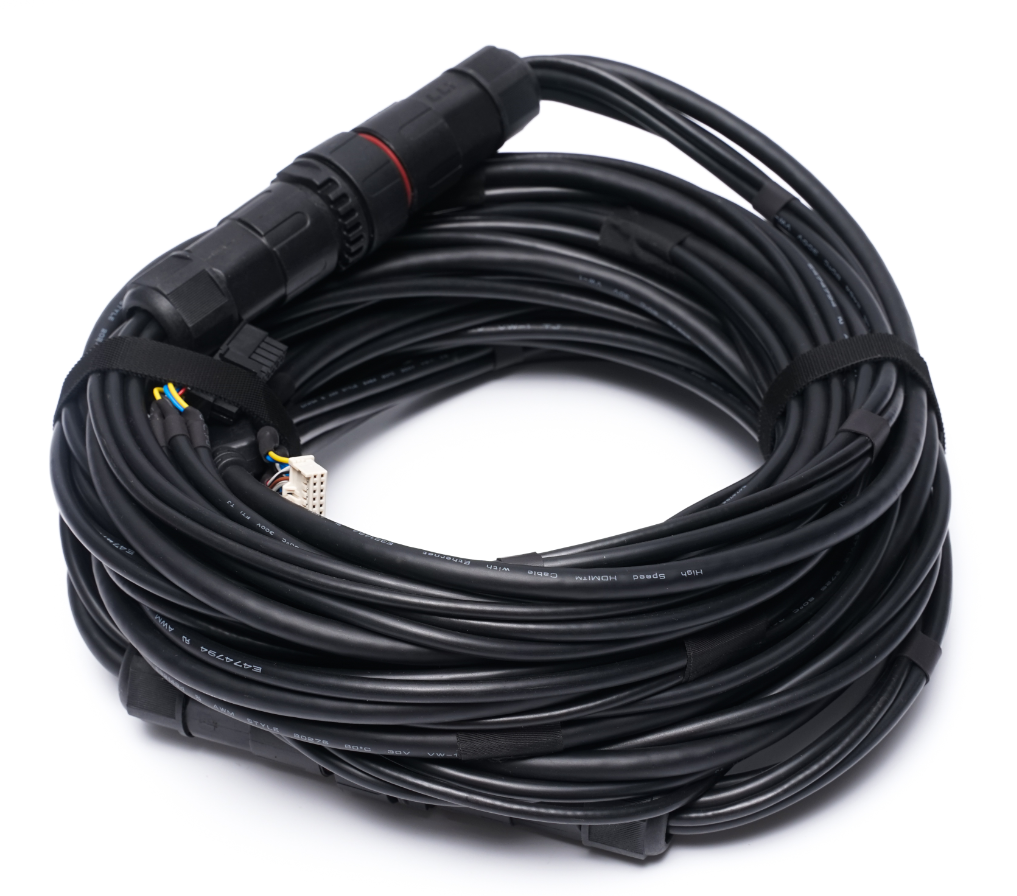
Molded Wiring Harness
Molded protection and integrated harness features
For harnesses requiring molded connector transitions, branch features, strain relief, or component encapsulation.
XSD Harness manufactures build-to-print wiring harnesses for OEM applications according to customer drawings, wiring diagrams, BOMs, connector specifications, samples and approved technical requirements. From prototype builds to repeat production, harness architecture, wire selection, connectors, branches, protection and inspection can be configured for the project.
A custom wiring harness organizes wires, cables, connectors, terminals and protective components into a defined electrical assembly for a specific machine, vehicle or electronic system. Unlike a standard cable assembly, a wiring harness may contain multiple branches, different wire sizes, several connector types, labels, clips, sleeves, conduit and other routing components.
XSD manufactures wiring harnesses according to customer-approved electrical and mechanical requirements rather than a fixed catalog configuration. The drawing defines how the circuits connect; the mechanical layout defines how the assembly fits the equipment.
Identify the requirement that matters most to your build, then explore the specialist page. A project may combine more than one of these manufacturing approaches.
Molded protection and integrated harness features
For harnesses requiring molded connector transitions, branch features, strain relief, or component encapsulation.
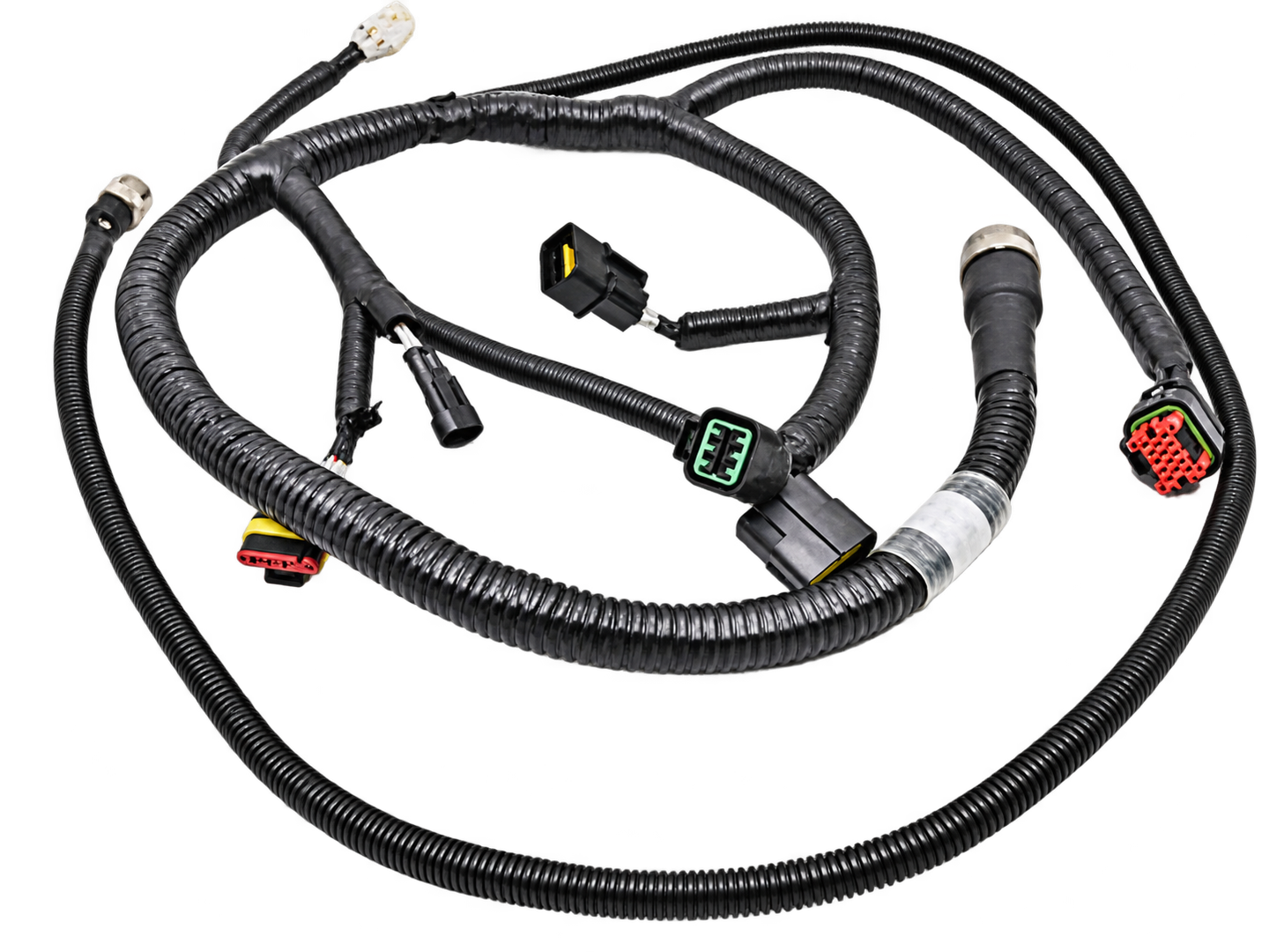
Sealed harnesses for moisture and environmental exposure
For automotive, industrial, outdoor, agricultural, and other environments requiring defined sealing strategies.
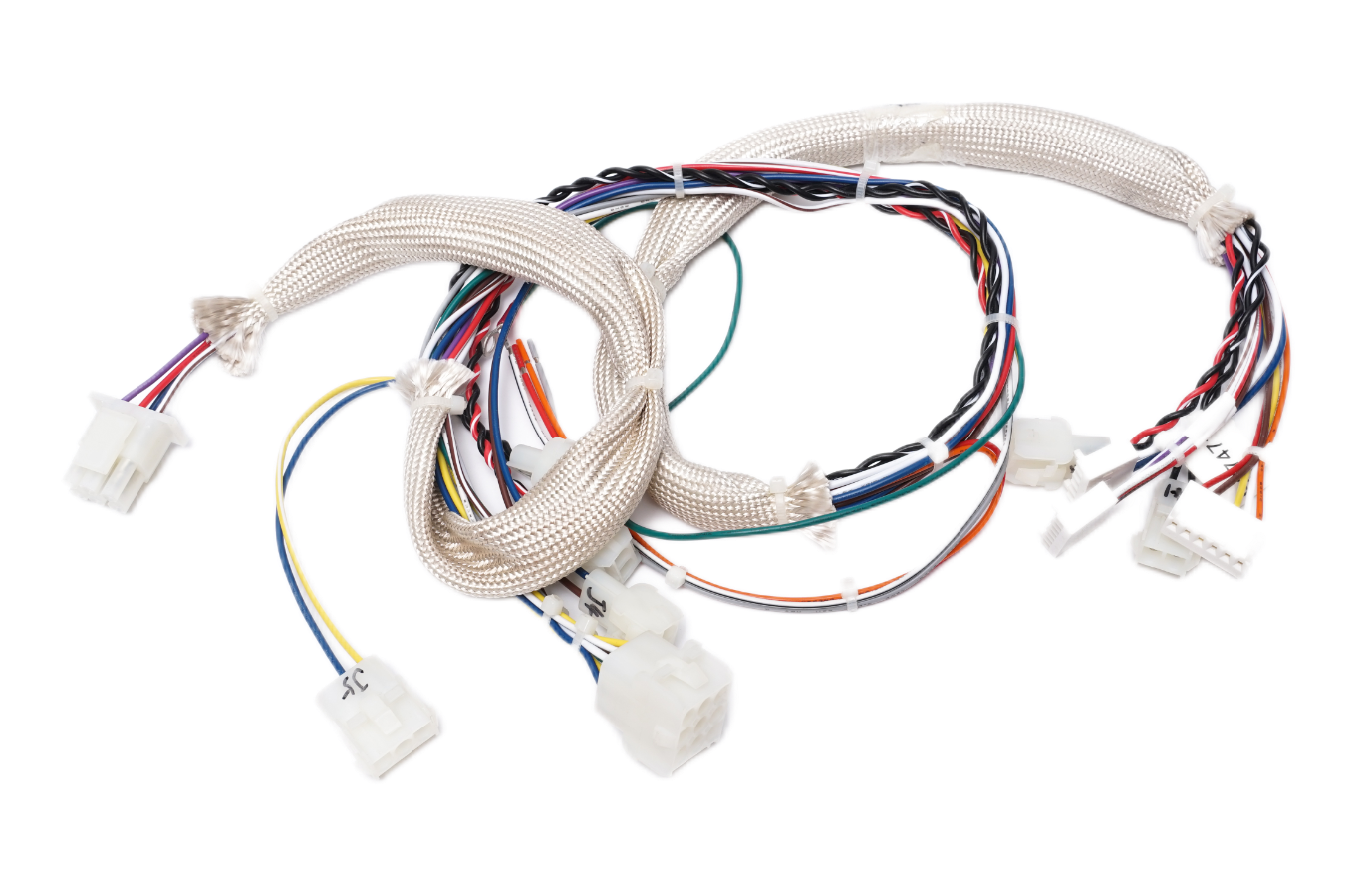
Engineering samples before production release
For fit checks, functional validation, first articles, pilot builds, and design iteration.
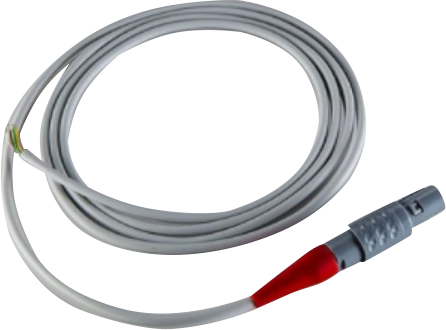
Connector and cable transition overmolding
For strain relief, mechanical protection, molded cable exits, and selected environmental protection.
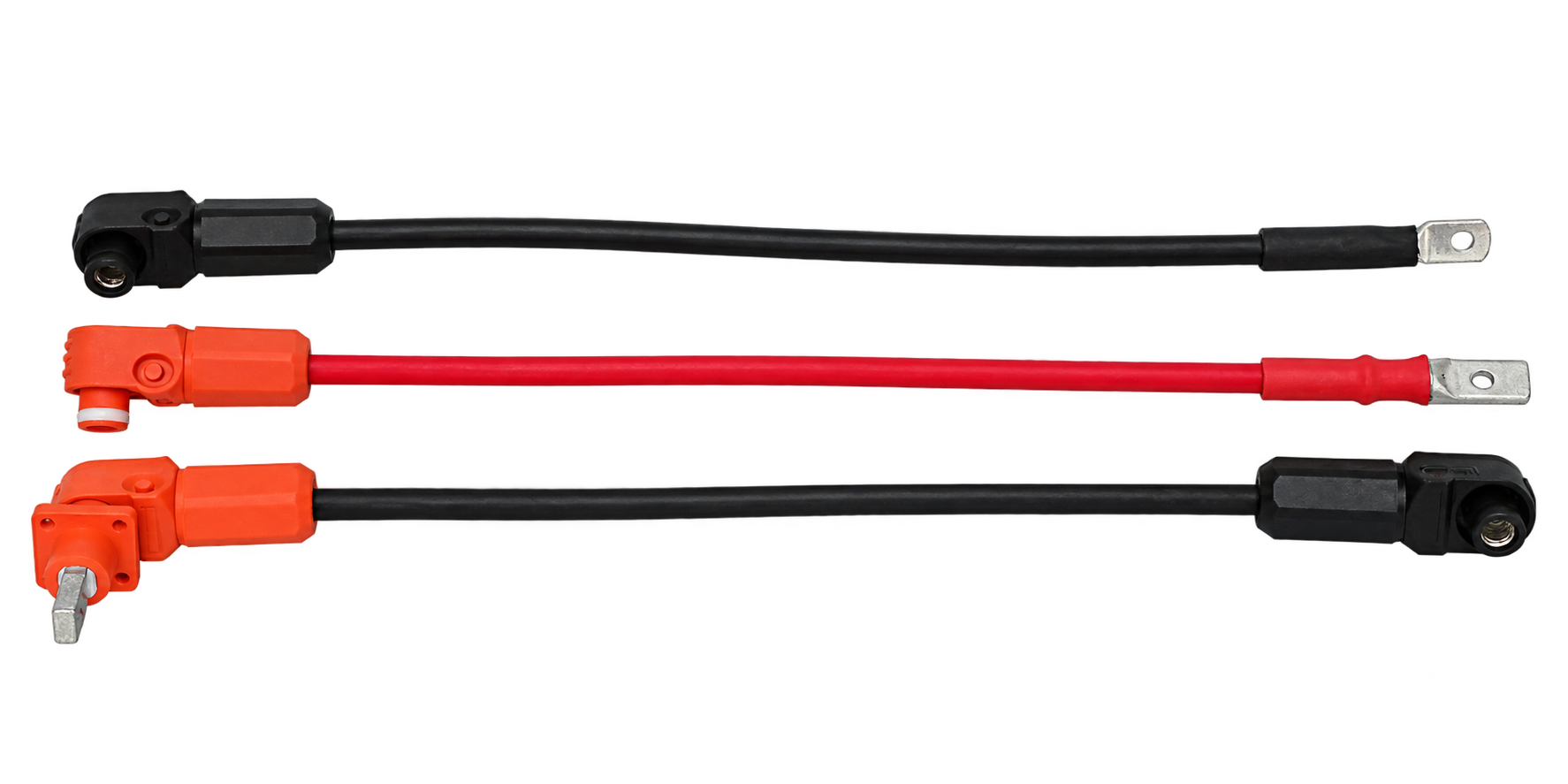
HV interconnects for EV, ESS and power applications
For battery, PDU, inverter, motor, charger, and high-voltage equipment connections.
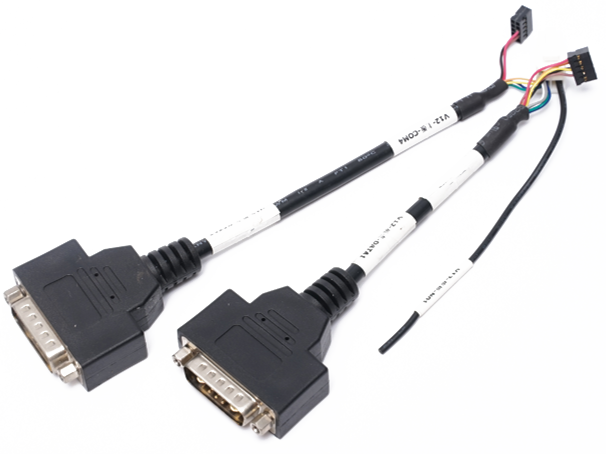
Signal, control, sensor and low-power circuits
For controllers, sensors, actuators, displays, electronics and automation systems.
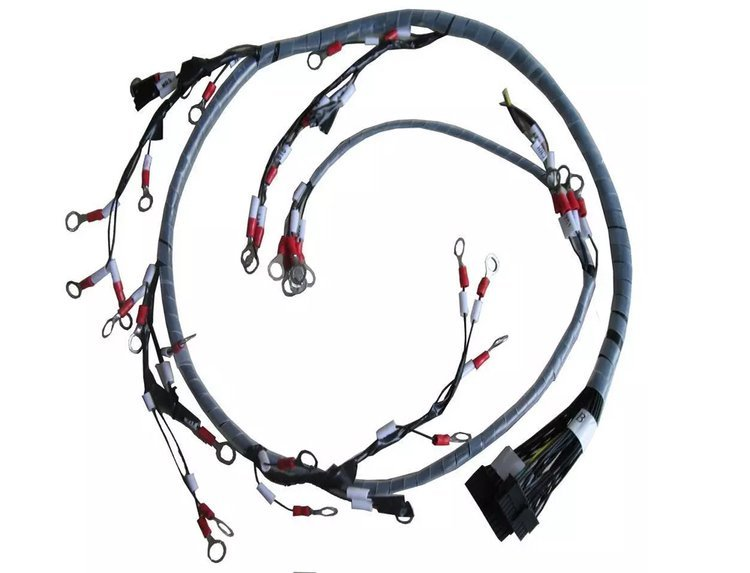
Non-standard harnesses for unique OEM requirements
For complex branch layouts, unusual connector combinations, mixed power/signal circuits, motion, or harsh environments.
Photographs show assembly structures. Component selection, sealing, electrical ratings and validation are confirmed for the approved project.
Both are defined by the application. The distinction below describes common configurations, not an absolute rule.
Looking for simpler connectorized cables?
| Custom Wiring Harness | Custom Cable Assembly |
|---|---|
| Often multi-branch | Often point-to-point |
| Can contain many circuits | Usually simpler circuit architecture |
| Multiple connector destinations | One or several defined endpoints |
| Complex routing | More straightforward routing |
| Clips, labels, conduit, tape, branches | Connector/cable-focused |
| Vehicle/machine-level distribution | Device/interface-level connection |
Review the electrical architecture and the installation geometry together. Requirements are documented in the approved drawing and component specification, not inferred from a photograph.
Share the information you have. It can be a complete document package or an existing sample with application requirements.
The more complete the project information, the more accurately XSD can evaluate manufacturing feasibility, component sourcing, process selection and inspection requirements.
Dimensions, branches and assembly details.
Circuit connections and component destinations.
Approved parts, materials and quantities.
Connector cavities and wire assignments.
Installation space, routing and mounting points.
Specified housings, contacts and mating interfaces.
Electrical, environmental and acceptance requirements.
A reference to review and document for customer approval.
Equipment function and operating conditions.
The approved construction determines the manufacturing route. This overview connects the project inputs to the finished assembly without replacing the detailed process review.
Drawing, BOM, components and application requirements.
Cutting, stripping and preparation.
Crimping and termination according to approved components.
Terminal insertion, connector configuration and pinout.
Branches, sleeves, conduit, heat shrink, labels and clips.
Where required by the design.
Electrical, dimensional and mechanical checks according to the approved plan.
The company profile documents the production and inspection resources shown here. Equipment selection and tooling are confirmed for the actual wire, contact, connector and production volume.
Documented cutting and stripping resources prepare wires to the specified dimensions.
Terminal processing is selected for the approved wire, contact and production volume.
Insertion equipment supports assembly into specified connector housings and cavities.
Soldering resources are used for selected interfaces when the approved construction requires them.
Molding equipment supports reviewed cable transitions and protective features.
Inspection resources support the checks selected for the completed harness.
XSD manufactures around customer-specified connector and terminal systems, subject to component availability and manufacturing review.
Specify part numbers, mating components, wire compatibility and approved sourcing requirements. Brand names or connector appearance alone do not define an approved component or establish manufacturer authorization.
The equipment function, electrical interfaces, routing and environment define the assembly. Industry experience does not establish blanket product qualification.
Vehicle control, sensor, lighting, battery and electrical systems.
Battery, BMS, inverter and cabinet interconnections.
Machines, controllers, sensors and automation.
Motors, encoders, sensors, grippers and controllers.
Tractors, harvesters and outdoor equipment.
Customer-defined harnesses for equipment applications.
Internal device interconnections and control systems.
Electric motorcycle, e-bike and auxiliary electric systems.
Inspection methods, test selection and sampling requirements are defined according to the approved product specification and project quality plan.
Test methods are selected according to project requirements. Electrical checks, connection inspection, dimensions and mechanical evidence are reviewed against the agreed acceptance criteria.
Not every harness undergoes every available test. Confirm the method, limits, sequence and sampling plan for the application.
Record the design and manufacturing requirements before release. Each approval point provides a reference for the next build and helps keep revisions visible.
Drawings, BOMs, wiring diagrams, specifications or samples establish the review inputs. Approved requirements remain the manufacturing reference.
XSD Harness is the specialized wire harness and cable assembly manufacturing business of Dongguan XSD Cable Technology Co., Ltd., supported by broader wire and cable expertise.
Documented processes cover wire preparation, crimping, connector assembly, selected soldering, molding, harness assembly and inspection.
Development builds, first articles and pilot runs provide a route to repeat OEM manufacturing after customer approval.
Inspection follows the approved specification and quality plan. Available tests are not presented as universal product guarantees.
Application experience spans automotive, energy, industrial equipment, agriculture, robotics, electronics and other customer-defined equipment.
Send the available project information. This preparation checklist helps identify useful review inputs; you do not need every item before starting a conversation.
0 of 21 items ready
Contact XSD to confirm shipping and review arrangements before sending a sample. Confirm confidentiality requirements before sharing project documents.
Send the drawing, wiring diagram, BOM, pinout and available component references, together with dimensions, quantity, application and inspection criteria. If some details are missing, share what you have so the review can identify the remaining inputs.
XSD can review an existing harness with the available electrical and application information. Materials, component part numbers, dimensions, pinout and acceptance criteria must be documented and approved by the customer before manufacturing. A sample is not automatically a complete specification.
Yes. These features can be configured to customer requirements, subject to component compatibility, availability and manufacturing review. Confirm mating parts, wire-to-terminal compatibility, branch dimensions, orientation and the approved sourcing route.
A harness can combine these functions where they are defined in the customer-approved electrical architecture. Provide wire sizes, circuit assignments, shielding or separation requirements and the applicable electrical acceptance criteria for review.
XSD supports engineering samples, first articles, fit and function reviews, and pilot builds. Prototype revisions should be recorded and approved before the configuration is released into repeat production. The Prototype Wiring Harness page explains this route in more detail.
Sealed connectors, molding and overmolding can be reviewed where the application requires them. Sealing and environmental performance depend on the complete assembly, materials, installation and agreed validation method; a component rating does not establish a universal finished-harness rating.
Documented resources include circuit verification, resistance checks, pull-force testing, cross-section analysis, CCD inspection, dimensional measurement and selected mechanical or environmental testing. Methods, limits and sampling are agreed for the project rather than applied indiscriminately to every harness.
Projects can progress from prototype and low-volume builds through pilot and repeat production. Quantities, component sourcing, tooling, process selection and production planning are reviewed for the actual configuration. No fixed minimum quantity or delivery promise is assumed before quotation.
Applications include automotive, energy storage, industrial equipment, robotics, agriculture, medical equipment, electronics and e-mobility. The equipment requirements determine the build. An industry reference does not imply blanket regulatory certification or qualification for every application.
Send your drawing, BOM, wiring diagram, specification or sample information. Review the harness architecture, components, routing and acceptance requirements with XSD before manufacturing.