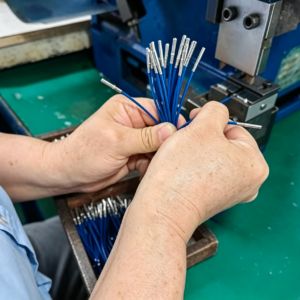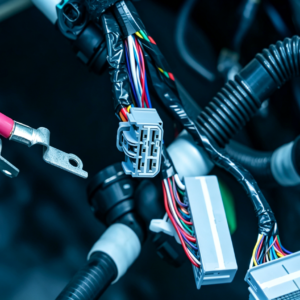

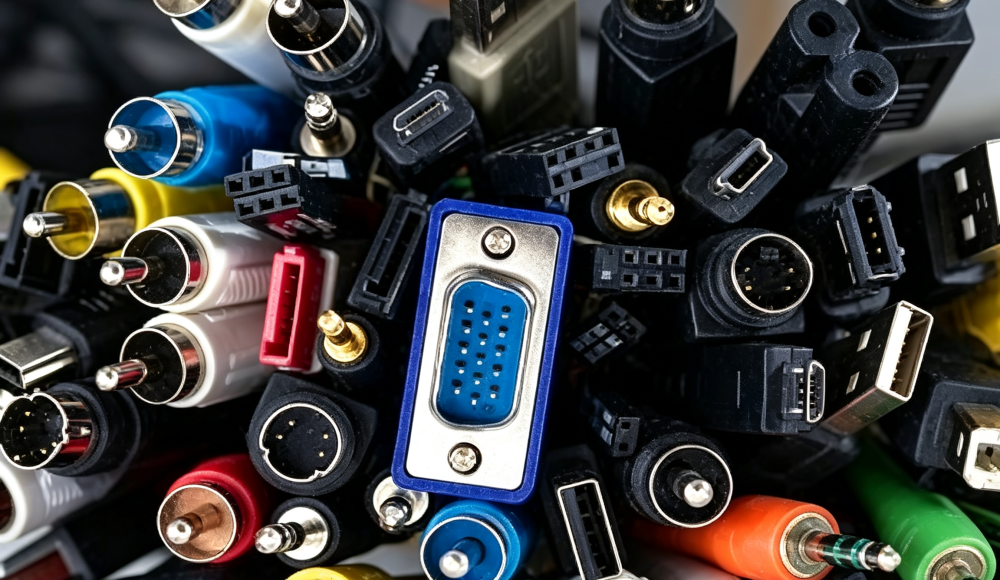
Molded cables are widely used in automotive, industrial equipment, electronics, robotics, and other applications where standard cable assemblies may not provide sufficient mechanical protection or installation flexibility.
This guide explains what molded cables are, how cable overmolding works, common types and materials, key design considerations, manufacturing processes, and what to look for when selecting a custom molded cable manufacturer.
What Is a Molded Cable?
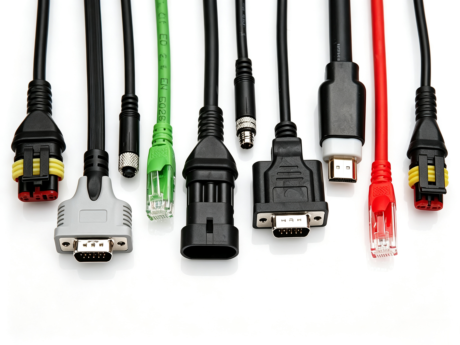
A molded cable is a cable assembly that incorporates a molded polymer section around part of the cable, connector, terminal, or cable exit.
The molded section can be designed to perform several functions:
- Provide strain relief
- Protect cable and connector interfaces
- Improve mechanical durability
- Control cable bending
- Protect against environmental exposure
- Create a customized cable-to-connector transition
- Integrate multiple components into a compact assembly
Unlike a conventional cable assembly that may use separate boots, heat-shrink tubing, or other protection methods, a molded cable can integrate the protective structure directly into the finished assembly.
The exact design depends on the cable construction, connector geometry, overmold material, operating environment, and customer requirements.
What Is Cable Overmolding and How Does It Work?
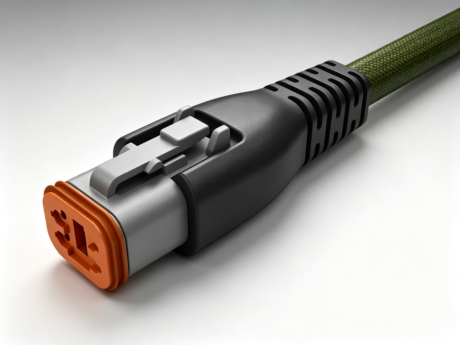
Cable overmolding is a manufacturing process in which a polymer material is molded around a section of an existing cable or cable assembly.
A typical process includes:
Cable & Connector Preparation → Assembly → Mold Positioning → Polymer Injection → Cooling → Demolding → Finishing → Inspection & Testing
Cable and Connector Preparation
The cable, terminals, and connectors are prepared according to the required assembly specifications.
Depending on the product, preparation may include:
- Cutting
- Stripping
- Crimping
- Terminal insertion
- Connector assembly
- Electrical verification
Mold Positioning and Fixturing
The cable assembly is positioned inside a mold.
Accurate positioning is important because the final molded geometry depends on the relationship between the cable, connector, terminals, and mold cavity.
Polymer Injection
The selected molding material is introduced into the mold cavity.
The material flows around the specified portion of the assembly and forms the required shape.
Cooling and Demolding
After the material has sufficiently cooled and solidified, the finished assembly is removed from the mold.
Additional trimming or finishing may be required depending on the design.
Inspection and Testing
The finished molded cable can then be checked for:
- Dimensions
- Appearance
- Cable position
- Connector alignment
- Electrical continuity
- Mechanical integrity
- Other application-specific requirements
What Are the Different Types of Molded Cables?
Molded cables can be classified according to their geometry, application, and intended function.
Straight Molded Cables
A straight molded transition is commonly used when the cable exits the connector in a straightforward direction.
It can provide a clean cable-to-connector transition and integrated strain relief.
Right-Angle Molded Cables
Right-angle designs redirect the cable at a defined angle.
They are useful where installation space is limited or where cable routing requires a controlled direction.
Strain-Relieved Molded Cables
These designs focus on reducing mechanical stress where the cable exits the connector or molded section.
A properly designed strain relief can help reduce excessive bending and mechanical loading at the connection point.
Sealed or Environmentally Protected Molded Cables
Some molded cable assemblies are designed to provide additional protection against environmental exposure.
Depending on the material, interface design, and manufacturing process, applications may require resistance to:
- Moisture
- Dust
- Chemicals
- Abrasion
- Temperature variation
- Outdoor exposure
A molded cable should not automatically be considered waterproof or IP-rated. The required environmental performance must be specifically designed and verified.
Multi-Branch Molded Cable Assemblies
Some applications require several cable branches to be integrated into a single assembly.
Custom molding can help create a controlled transition between multiple cable sections.
Custom-Shaped Molded Cables
For specialized products, the molded section can be designed around specific:
- Installation constraints
- Connector geometry
- Cable routing
- Mechanical requirements
- Product appearance
This makes custom overmolding particularly useful for OEM applications.
Where Are Molded Cables Used?
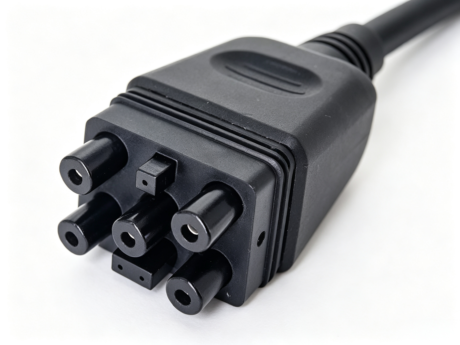
Molded cable assemblies are used when a cable needs more than basic electrical connectivity.
Automotive and EV Applications
Potential applications include:
- Vehicle electrical systems
- Sensors
- Control systems
- Battery-related systems
- Electronic modules
Automotive environments can expose cable assemblies to vibration, temperature changes, movement, and mechanical stress, making appropriate strain relief and protection important.
Industrial Equipment
Molded cables can be used in:
- Industrial machinery
- Automation equipment
- Control systems
- Sensors
- Testing equipment
The molded structure can be designed to suit specific routing and mechanical requirements.
Robotics
Robotic applications may involve repeated cable movement and bending.
The cable assembly therefore needs to account for:
- Flexing
- Bending
- Cable routing
- Connector protection
- Mechanical stress
Electronics
Molded cable assemblies can be used for:
- Internal connections
- External connections
- Power assemblies
- Signal cables
- Device interconnections
Outdoor and Harsh Environments
When cable assemblies are exposed to moisture, dust, UV exposure, chemicals, or abrasion, the cable and overmold materials should be selected according to the actual operating conditions.
Specialized Equipment
Molded cables can also be customized for equipment where standard cable assemblies do not provide the required combination of electrical, mechanical, dimensional, or environmental performance.
What Are the Advantages of Molded Cables?
The primary advantage of a molded cable is that the cable, connector, and protective structure can be designed as an integrated assembly.
Improved Strain Relief
A molded strain relief can reduce mechanical stress at the cable exit.
This is particularly important where the cable is repeatedly bent or exposed to pulling forces.
Mechanical Protection
The molded section can provide additional protection around vulnerable cable-to-connector transitions.
Environmental Protection
Depending on the material and design, overmolding can provide additional protection against environmental exposure.
However, environmental performance depends on the complete design rather than the presence of an overmold alone.
Integrated Cable-to-Connector Design
Overmolding can combine several functions into one finished component.
This can eliminate the need for separate protective components in certain applications.
Customized Shape and Appearance
The mold can be designed around the product’s physical requirements, allowing customized:
- Geometry
- Cable exit direction
- Strain relief
- Surface appearance
- Branding or identification features where appropriate
What Materials Are Used for Cable Overmolding?
Material selection is one of the most important decisions in molded cable design.
Common overmolding materials can include:
- PVC
- TPU
- TPE
- Silicone
- Other application-specific polymers
The correct material depends on the intended operating environment.
| Material | General Characteristics | Typical Considerations |
| PVC | Versatile and cost-effective | General cable applications |
| TPU | Flexible and abrasion-resistant | Applications requiring flexibility and durability |
| TPE | Flexible and process-friendly | General-purpose molded components |
| Silicone | Flexible and temperature-resistant | Specialized environments |
These are general material characteristics. Actual performance depends on the specific material grade and formulation.
How Do You Choose the Right Overmold Material?
Consider:
Temperature
What operating and storage temperatures will the cable experience?
Flexibility
Will the cable remain stationary, or will it experience repeated movement?
Hardness
Does the molded section need to be soft and flexible or relatively rigid?
Abrasion
Will the assembly experience repeated contact or mechanical wear?
Chemical Exposure
Will it contact oil, solvents, cleaning agents, or other chemicals?
Moisture and Environmental Exposure
Will the cable be installed indoors, outdoors, or in a potentially wet environment?
UV Exposure
Outdoor applications may require appropriate UV resistance.
Material selection should therefore be based on the actual application environment, rather than simply choosing the lowest-cost polymer.
How Do You Design a Molded Cable?
A successful molded cable starts with engineering requirements, not the molding process itself.
1. Define the Electrical Requirements
Determine:
- Voltage
- Current
- Signal type
- Number of conductors
- Wire gauge
- Shielding requirements
These requirements influence the cable and connector selection.
2. Select the Cable
Consider:
- Conductor construction
- Wire gauge
- Insulation
- Flexibility
- Temperature requirements
- Environmental conditions
The cable must be compatible with both the application and the selected termination.
3. Select the Connector and Terminal
Connector selection may depend on:
- Pin count
- Electrical requirements
- Mating system
- Installation space
- Terminal type
- Environmental requirements
The connector geometry also directly affects mold design.
4. Select the Overmold Material
Material selection should consider:
- Hardness
- Flexibility
- Temperature
- Chemical resistance
- Abrasion
- Environmental exposure
- Required mechanical performance
5. Design the Strain Relief
Strain relief is one of the most important aspects of molded cable design.
Consider:
- Cable exit direction
- Bend radius
- Expected movement
- Bending frequency
- Pulling force
- Installation conditions
The goal is to prevent excessive stress from concentrating at the cable-to-connector transition.
6. Consider Mold Geometry
The mold design should account for:
- Part geometry
- Wall thickness
- Draft
- Parting line
- Connector positioning
- Cable positioning
- Material flow
- Cooling
- Demolding
A design that looks acceptable on a drawing may still require modification to achieve reliable and repeatable molding.
7. Define Testing Requirements
Testing should be defined according to the product’s application.
Potential requirements include:
- Continuity testing
- Insulation testing
- Hi-pot testing
- Pull testing
- Leak testing
- Environmental testing
- Functional testing
Not every molded cable requires every test.
The testing plan should be established according to customer specifications and application requirements.
What Are Common Molded Cable Design Problems?
Good molded cable design requires coordination between electrical, mechanical, material, and manufacturing requirements.
Poor Strain Relief Design
If the transition does not adequately control bending stress, repeated movement can place excessive force on the cable or connection.
Incompatible Overmold Material
The selected polymer must be appropriate for the cable, connector, operating temperature, and environmental conditions.
Material compatibility should be evaluated before production.
Incorrect Wall Thickness
Wall thickness affects:
- Material flow
- Cooling
- Appearance
- Strength
- Dimensional stability
The optimal design depends on the selected material and geometry.
Connector Movement During Molding
If the connector or cable is not properly positioned during molding, the finished product may have dimensional or alignment problems.
Inadequate Environmental Sealing
An overmold does not automatically guarantee waterproofing.
The complete design must consider interfaces, material selection, mold geometry, and the required sealing performance.
Poor Mold Design
Improper mold design can contribute to:
- Flash
- Incomplete filling
- Uneven material distribution
- Sink marks
- Dimensional variation
- Difficult demolding
For this reason, mold design should be considered during the early engineering stage rather than after the cable design is finalized.
What Is the Molded Cable Manufacturing Process?
A typical custom molded cable project can follow this process:
Engineering Review
↓
Cable & Connector Selection
↓
Cable Preparation & Assembly
↓
Mold Design
↓
Tooling
↓
Overmolding
↓
Trimming & Finishing
↓
Electrical / Mechanical Testing
↓
Final Inspection
↓
Packaging
The actual process varies according to the cable construction, connector, overmold material, mold design, production volume, and customer requirements.
For custom projects, engineering review before tooling is particularly important because design changes after mold completion can increase cost and lead time.
Molded Cable vs. Overmolded Cable vs. Standard Cable Assembly
These terms are related but are not always used in exactly the same way.
| Term | General Meaning |
| Cable Assembly | A cable combined with connectors, terminals, or other components |
| Molded Cable | A cable assembly incorporating a molded polymer structure |
| Overmolded Cable | A cable assembly in which polymer is molded over a specified portion of the cable or connector |
In practical manufacturing discussions, molded cable and overmolded cable are often used interchangeably.
The important consideration is not the terminology itself, but the actual requirements of the finished assembly:
Electrical performance + mechanical protection + environmental requirements + manufacturability
What Affects Custom Molded Cable Cost?
The price of a custom molded cable depends on more than the cable length.
Important cost factors include:
- Cable type
- Cable length
- Wire gauge
- Connector
- Terminal
- Overmold material
- Mold complexity
- Tooling requirements
- Number of cavities
- Production quantity
- Testing requirements
- Packaging
- Custom geometry
For low-volume projects, tooling can represent a significant portion of the initial project cost.
For higher-volume production, tooling costs can typically be distributed across a larger production quantity.
For an accurate quotation, a manufacturer will usually need the drawing, cable specifications, connector information, quantity, and application requirements.
What Should You Look for in a Molded Cable Manufacturer?
Choosing the right supplier is about more than finding a company that can inject plastic.
A reliable supplier should understand the complete cable assembly.
Cable Assembly Capability
Ask whether the supplier can handle relevant processes such as:
- Wire cutting
- Wire stripping
- Crimping
- Terminal insertion
- Connector assembly
- Electrical testing
Overmolding Capability
Evaluate whether the supplier can support:
- Mold design
- Tooling
- Material selection
- Overmolding
- Custom geometries
- Production inspection
Engineering Support
A capable manufacturer should be able to review:
- 2D drawings
- 3D models
- BOMs
- Wiring diagrams
- Connector specifications
- Samples
This can help identify design or manufacturing issues before tooling.
Quality Control
Ask how the supplier controls:
- Dimensions
- Cable position
- Connector alignment
- Electrical performance
- Mechanical requirements
- Production consistency
Prototype to Production Support
For OEM projects, it is valuable to work with a manufacturer that can support the complete development cycle:
Prototype → Tooling → Pilot Production → Mass Production
This can simplify supplier management and reduce the risk of transferring the product between different manufacturers.
How XSD Harness Supports Custom Molded Cable Projects
For a custom molded cable, the final product depends on more than overmolding alone.
The complete manufacturing chain may include:
Cable Selection → Wire Processing → Crimping → Connector Assembly → Molding → Testing → Final Inspection
XSD Harness specializes in custom wire harness and cable assembly manufacturing, making the complete assembly requirement an important part of the engineering review.
Customers can provide project information such as:
- 2D drawings
- 3D models
- BOMs
- Wiring diagrams
- Connector part numbers
- Terminal specifications
- Cable specifications
- Samples
- Required quantities
- Testing requirements
The more complete the technical information, the more accurately the manufacturer can evaluate manufacturability and prepare a quotation.
For custom molded cable projects, the most important questions to establish early include:
- What cable and connector are required?
- What is the operating environment?
- What overmold material is appropriate?
- What strain-relief performance is required?
- What dimensions and installation constraints apply?
- What testing is required?
- What is the expected production volume?
A professional manufacturing review should address these requirements before tooling and mass production.
FAQs About Molded Cables
What is a molded cable?
A molded cable is a cable or cable assembly that incorporates a molded polymer section around part of the cable, connector, terminal, or cable exit. The molded section can provide strain relief, mechanical protection, environmental protection, and a customized cable-to-connector transition.
What is cable overmolding?
Cable overmolding is a manufacturing process in which polymer material is molded around a specified portion of a cable or cable assembly. It can integrate strain relief and protection directly into the finished assembly.
What materials are used for molded cables?
Common overmolding materials include PVC, TPU, TPE, and silicone. The appropriate material depends on temperature, flexibility, hardness, abrasion, chemical exposure, UV exposure, and other application requirements.
Are molded cables waterproof?
Not necessarily. A molded cable can be designed for environmental sealing, but waterproof or specific IP performance depends on the complete cable, connector, overmold, interface, material, and manufacturing design. The required performance should be specified and tested.
What are molded cables used for?
Molded cables are used in applications including automotive, EVs, industrial equipment, robotics, electronics, automation, outdoor equipment, and other products requiring customized cable protection, strain relief, or cable-to-connector integration.
How do you choose the right overmold material?
Consider the operating temperature, flexibility, hardness, abrasion, chemical exposure, UV exposure, moisture, mechanical stress, and required service life. Material selection should be based on the actual application and specific material grade.
How do you design strain relief for a molded cable?
Strain relief design should consider cable diameter, bend direction, bend radius, expected movement, bending frequency, pulling force, connector geometry, and installation conditions. The objective is to prevent excessive stress from concentrating at the cable exit.
How is a molded cable manufactured?
A typical process includes engineering review, cable and connector preparation, mold design, tooling, cable positioning, polymer injection, cooling, demolding, finishing, inspection, and electrical or mechanical testing.
How much does a custom molded cable cost?
Cost depends on cable and connector specifications, overmold material, mold complexity, tooling, production quantity, testing, and other requirements. A drawing, BOM, sample, or detailed specification allows a manufacturer to provide a more accurate quotation.
Can a wire harness manufacturer make custom molded cables?
Yes, manufacturers with the appropriate cable assembly and molding capabilities can produce custom molded cable assemblies according to customer drawings, samples, specifications, and application requirements.
What information should I provide for a molded cable quotation?
Provide the cable specification, connector and terminal part numbers, cable length, 2D drawing or 3D model, overmold requirements, quantity, application environment, and testing requirements whenever available.
Need a Custom Molded Cable Assembly?
A molded cable is more than a cable with plastic around it. A reliable design must coordinate electrical requirements, cable and connector selection, overmold material, strain relief, mold geometry, environmental conditions, testing, and production requirements.
If you are developing a new product or looking for a supplier for an existing cable assembly, XSD Harness can review your available drawings, BOMs, wiring diagrams, specifications, or samples to understand your requirements.
Send your molded cable drawing or sample to XSD Harness for an engineering review and quotation.