
For OEMs and product manufacturers, choosing the right custom wire harness manufacturer is therefore an important part of product quality and supply-chain risk management.
From wire cutting and stripping to terminal crimping, connector assembly, routing, electrical testing, and final inspection, every stage of the harness manufacturing process can affect reliability.
This guide explains the six most common wire harness assembly problems, their root causes, how professional manufacturers prevent them, and what customers should evaluate when selecting a reliable wire harness supplier.
What Causes Wire Harness Defects?
Wire harness defects can originate at almost any stage of the manufacturing process. Some problems begin during engineering design, while others are introduced during material preparation, wire processing, assembly, or testing.
Common causes include:
- Incomplete or inaccurate engineering drawings
- Incorrect wire, terminal, or connector selection
- Inconsistent wire cutting and stripping
- Improper terminal crimping
- Incorrect wire routing
- Poor workmanship
- Uncalibrated production equipment
- Insufficient operator training
- Inadequate incoming material inspection
- Insufficient electrical testing
- Poor production traceability
A reliable wire harness assembly manufacturer should therefore control quality throughout the entire production process rather than relying only on final inspection.
A typical quality-controlled workflow is:
Engineering Review → Material Inspection → Wire Cutting & Stripping → Terminal Crimping → Connector Assembly → Harness Routing → Electrical Testing → Final Inspection → Packing & Traceability
The earlier a defect is detected, the lower the cost of correction. A crimping problem discovered during production may require only a simple rework operation. The same defect discovered after shipment can involve transportation, customer inspection, replacement, downtime, warranty costs, and potentially much more.
1. Poor Wire Harness Design and Documentation
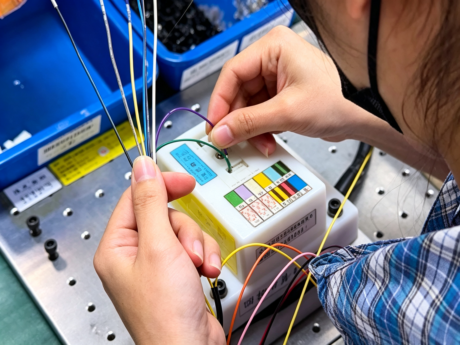
What Goes Wrong?
Many wire harness problems begin before manufacturing even starts.
A harness may be produced exactly according to an incomplete or incorrect drawing, yet still fail during installation because the original design did not adequately consider the real application environment.
Typical design-related problems include:
- Incorrect wire lengths
- Incorrect terminal or connector selection
- Missing connection points
- Incorrect pin assignments
- Insufficient clearance
- Inadequate bend radius
- Poor routing paths
- Incorrect branch locations
- Insufficient protection against heat, vibration, or abrasion
- Harness dimensions that do not match the final assembly
A harness can be electrically correct but mechanically unsuitable. For example, a cable assembly may have the correct pinout but be too short to reach its installation point, or it may have sufficient length but interfere with a moving component.
Why Does Harness Design Matter?
A professional wire harness is designed around both electrical requirements and physical installation requirements.
Before production begins, engineers should consider:
- Voltage and current requirements
- Wire gauge
- Circuit function
- Connector type
- Terminal compatibility
- Wire length
- Branch locations
- Routing path
- Minimum bend radius
- Environmental temperature
- Vibration
- Moisture
- Chemical exposure
- Mechanical movement
- Installation and maintenance requirements
The design should also distinguish between the theoretical routing path shown in CAD and the actual conditions of the assembled product.
How Can Manufacturers Prevent Design Problems?
A robust process should include:
Detailed Engineering Documentation
Drawings should clearly define wire specifications, circuit numbers, connector part numbers, terminal positions, wire lengths, strip lengths, and assembly requirements.
Prototype Harnesses
Producing a prototype before mass production can identify problems related to fit, routing, connector orientation, branch positions, and installation.
Design Reviews
Engineering, manufacturing, quality, and customer representatives should review critical harness designs before production.
Design for Manufacturing
A good harness design should not only function correctly; it should also be practical to manufacture consistently and economically.
For customers developing a new product, working with an experienced custom cable assembly manufacturer during the design stage can help identify potential manufacturing problems before they become expensive production issues.
2. Incorrect or Low-Quality Wire Harness Materials
What Goes Wrong?
The performance of a wire harness depends heavily on the materials used.
A harness may contain:
- Electrical wires
- Multi-conductor cables
- Terminals
- Connectors
- Seals
- Insulation
- Heat-shrink tubing
- Protective sleeving
- Conduit
- Cable ties
- Clips
- Grommets
- Overmolded components
Using an unsuitable component can reduce the reliability of the complete assembly.
For example, a wire with an inappropriate temperature rating may experience insulation degradation when installed near a heat source. Similarly, a connector that is not appropriate for the required environmental conditions may experience corrosion or poor electrical performance.
What Should Be Considered When Selecting Harness Materials?
Material selection should be based on the actual application rather than simply choosing the lowest-cost component.
Important considerations include:
Electrical Requirements
- Voltage
- Current
- Wire gauge
- Resistance
- Signal requirements
Environmental Requirements
- Operating temperature
- Moisture
- Humidity
- Chemical exposure
- UV exposure
- Dust
- Corrosion
Mechanical Requirements
- Vibration
- Abrasion
- Flexing
- Tensile loading
- Repeated movement
- Installation stress
Connector Requirements
The connector and terminal must be compatible with the selected wire, contact system, current requirement, environmental conditions, and application.
How Can Manufacturers Prevent Material-Related Defects?
A professional harness manufacturer should establish controls for:
- Approved supplier selection
- Material specification verification
- Incoming inspection
- Part-number verification
- Material certification where required
- Lot or batch traceability
- Storage and handling
- First-in-first-out inventory control
For demanding applications, customers should ask their potential supplier how incoming materials are inspected and how component traceability is maintained.
3. Improper Wire Crimping
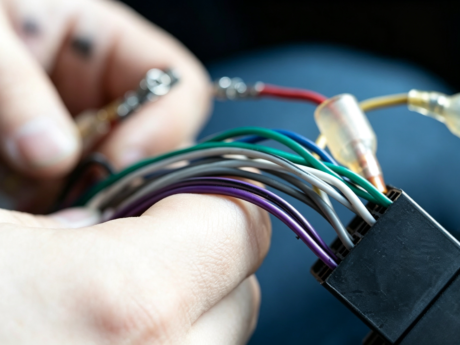
Why Is Crimping So Important?
Crimping is one of the most critical processes in wire harness manufacturing.
A crimp creates a mechanical and electrical connection between the conductor and terminal. If the crimp is properly designed and controlled, it provides reliable electrical conductivity and mechanical strength.
If the crimp is incorrect, however, the result may be a high-resistance connection, intermittent signal, open circuit, overheating, or premature failure.
Common Crimping Problems
Under-Crimping
A terminal that is not sufficiently compressed may have inadequate mechanical retention and poor electrical contact.
Over-Crimping
Excessive compression can damage wire strands or deform the terminal beyond acceptable limits.
Incorrect Wire-to-Terminal Matching
The terminal must be appropriate for the wire size and construction.
Incorrect Crimp Tooling
The crimp applicator and die geometry must be suitable for the specific terminal.
Uncalibrated Equipment
Production equipment can gradually change performance through wear or repeated operation.
Poor Operator Technique
Manual crimping can vary significantly if operators are not properly trained or if appropriate work instructions are unavailable.
How Can Crimping Defects Be Prevented?
A controlled crimping process should include:
- Correct terminal and wire selection
- Application-specific tooling
- Proper machine setup
- Tool calibration
- First-piece inspection
- Crimp-height verification
- Pull-force testing when required
- Visual inspection
- Periodic process inspection
- Cross-section analysis for critical applications
- Operator training
- Process documentation
The IPC/WHMA-A-620 standard is widely used as a reference for cable and wire harness workmanship and acceptance criteria.
For customers purchasing custom wire harnesses, it is worth asking:
How does the manufacturer verify crimp quality during production?
The answer can reveal a great deal about the supplier’s manufacturing maturity.
4. Inconsistent Wire Cutting and Stripping
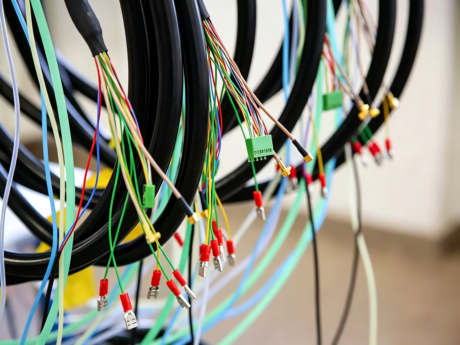
What Goes Wrong?
Wire length may appear to be a simple manufacturing parameter, but even small inconsistencies can create significant assembly problems.
If a wire is too short:
- It may not reach the connector
- It may create excessive tension
- The assembly may require an additional splice
- The harness may become difficult to install
If a wire is too long:
- Excess wire may create unnecessary bulk
- The wire may interfere with other components
- It may be exposed to abrasion or pinching
- Installation may become more difficult
- The finished harness may not fit correctly
Strip length is equally important. Excessive stripping can expose too much conductor, while insufficient stripping may prevent proper terminal contact.
What Causes Wire Length Variation?
Common causes include:
- Manual measurement
- Incorrect cut-list information
- Incorrect machine setup
- Worn cutting blades
- Poorly maintained equipment
- Failure to account for actual routing paths
- Operator variation
How Can Manufacturers Improve Wire Processing Accuracy?
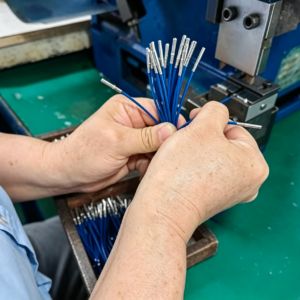
Professional wire harness production can use automated wire cutting and stripping equipment to improve repeatability.
Manufacturers should also use:
Standardized Cut Lists
Each wire should have a defined part number, wire specification, cut length, strip length, and termination requirement.
Form Boards and Assembly Fixtures
Assembly boards provide physical reference points for wire routing, branch locations, and overall harness dimensions.
First-Piece Verification
The first completed wire should be checked before the production run continues.
Periodic Length Inspection
Wire lengths should be checked at appropriate intervals and after equipment adjustments or maintenance.
These controls are particularly important for high-volume production, where a small process error can otherwise affect hundreds or thousands of assemblies.
5. Incorrect Wire Routing and Securing
Why Is Wire Routing Important?
A wire harness needs to survive not only electrical loads but also the physical environment in which it operates.
Incorrect routing can expose wires to:
- Sharp edges
- Heat sources
- Moving components
- Vibration
- Compression
- Abrasion
- Moisture
- Chemicals
- Excessive bending
In addition to mechanical damage, poor routing can create electromagnetic interference (EMI) concerns or make the finished harness difficult to install and maintain.
Common Wire Routing Problems
Examples include:
- Excessive bend radius
- Wires routed too close to heat sources
- Insufficient clearance from moving parts
- Incorrect branch positions
- Inadequate fastening
- Poor connector orientation
- Unsupported wire sections
- Excessive tension
- Inadequate protection at pass-through points
How Can Routing Problems Be Prevented?
A professional custom wiring harness manufacturer should translate the engineering design into clear manufacturing instructions.
The routing plan may specify:
- Wire paths
- Branch locations
- Minimum bend radius
- Keep-out areas
- Attachment points
- Clip positions
- Grommet locations
- Protective sleeving
- Conduit
- Heat protection
- Connector orientation
Depending on the application, manufacturers may use:
- Cable ties
- P-clips
- Grommets
- Edge protection
- Corrugated conduit
- Braided sleeving
- Heat-shrink tubing
- Adhesive-backed mounts
The correct protection method depends on the actual operating environment.
For example, a harness installed in an industrial machine may require different protection from one used in an automotive engine compartment, outdoor equipment, medical equipment, or electronic device.
6. Insufficient Electrical Testing and Quality Assurance
Why Is Testing Essential?
Even when a harness appears visually correct, hidden electrical defects may remain.
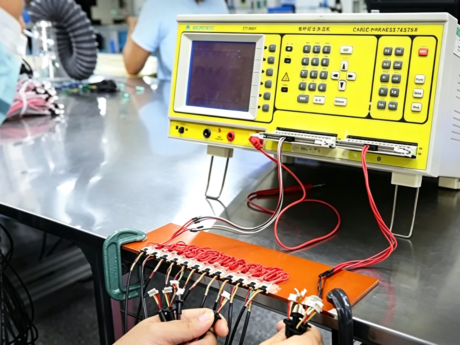
A professional wire harness manufacturing process should therefore include appropriate electrical testing before shipment.
Common tests include:
Continuity Testing
Verifies that each circuit is connected correctly and identifies open circuits or incorrect connections.
Short-Circuit Testing
Checks for unintended electrical connections between circuits.
Insulation Resistance Testing
Evaluates whether insulation provides adequate electrical isolation between conductors.
Hi-Pot / Dielectric Withstand Testing
For applications where applicable, this verifies insulation integrity under elevated voltage conditions.
Functional Testing
For more complex assemblies, functional testing can verify that the harness performs correctly when integrated with relevant components or test equipment.
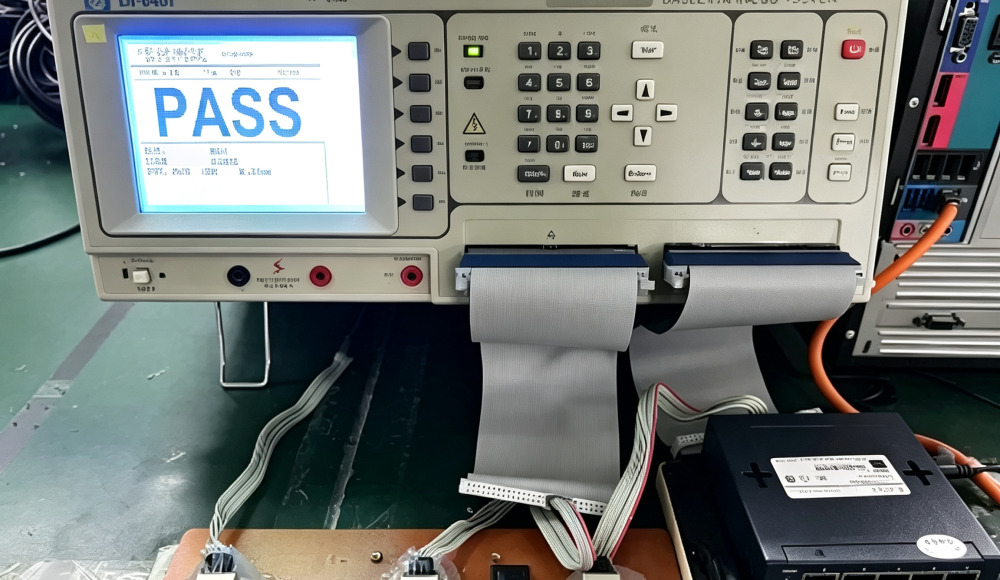
Why Automated Harness Testing Matters
Manual inspection alone cannot reliably identify every electrical fault.
Automated harness testers can help manufacturers verify:
- Pin-to-pin continuity
- Incorrect wiring
- Open circuits
- Short circuits
- Insulation resistance
- Dielectric withstand
- Other application-specific electrical characteristics
Automated testing can also create digital test records, helping manufacturers establish traceability.
What Should Be Recorded?
For production traceability, quality records may include:
- Harness part number
- Production lot
- Test result
- Test parameters
- Equipment identification
- Calibration information
- Operator information
- Inspection status
For customers in automotive, aerospace, medical, industrial, and other demanding industries, traceability can be an important supplier-selection criterion.
Wire Harness Quality Control: From Design to Final Inspection
High-quality wire harness manufacturing is not based on one inspection point. It is a process-control system.
A professional workflow can be divided into several stages.
Stage 1: Engineering Review
Review:
- Drawings
- BOM
- Wire specifications
- Connector specifications
- Terminal specifications
- Pin assignments
- Wire lengths
- Routing requirements
- Customer quality requirements
Stage 2: Incoming Material Inspection
Verify that incoming materials match approved specifications.
Stage 3: Wire Cutting and Stripping
Control:
- Wire length
- Strip length
- Cut quality
- Conductor condition
- Insulation condition
Stage 4: Terminal Crimping
Control:
- Correct terminal
- Correct wire
- Crimp height
- Tool condition
- Mechanical retention
- Electrical connection
Stage 5: Connector Assembly
Verify:
- Correct terminal cavity
- Correct pin position
- Terminal locking
- Connector orientation
- Secondary locks where applicable
Stage 6: Harness Routing and Assembly
Verify:
- Overall dimensions
- Branch positions
- Protective components
- Clips and fasteners
- Routing
- Connector orientation
Stage 7: Electrical Testing
Depending on requirements:
- Continuity
- Short-circuit testing
- Insulation resistance
- Hi-pot
- Functional testing
Stage 8: Final Inspection and Packaging
Final inspection should verify:
- Appearance
- Dimensions
- Labels
- Connector condition
- Protection
- Packaging
- Quantity
- Customer-specific requirements
This complete process helps ensure that quality is built into the harness, rather than simply checked at the end.
What Standards Apply to Wire Harness Manufacturing?
Different industries and applications may require different standards and customer-specific specifications.
One of the key workmanship standards is IPC/WHMA-A-620, which provides requirements and acceptance criteria for cable and wire harness assemblies.
Depending on the application, customers may also encounter:
- IATF 16949– quality management requirements associated with the automotive industry
- AS9100– quality management systems for aviation, space, and defense organizations
- SAE standards– applicable to specific automotive and aerospace wiring requirements
- UL requirements– applicable to certain wire and harness products and applications
- IEC standards– applicable to specific electrical and cable-related testing requirements
- RoHS requirements– relevant to restricted substances in applicable markets and products
The appropriate standards depend on the end application, geographic market, customer specifications, and regulatory requirements.
For this reason, customers should provide their applicable specifications during the RFQ stage. A qualified harness manufacturer can then review the requirements before production.
How Much Can a Wire Harness Defect Really Cost?
The cost of a defect depends heavily on when it is discovered.
A simple problem found during production may require only a small amount of rework.
The same defect discovered after shipment may involve:
- Customer inspection
- Return transportation
- Root-cause investigation
- Replacement production
- Expedited shipping
- Production downtime
- Warranty costs
- Field service
- Potential recalls
A useful quality-management concept is that the later a defect is discovered, the more expensive it becomes to correct.
| Detection Stage | Typical Consequence |
| During assembly | Simple rework or replacement |
| End-of-line testing | Diagnosis and production rework |
| Before customer installation | Replacement and logistics costs |
| At customer/OEM | Returns, downtime, replacement, and investigation |
| Field failure | Warranty, service, recall, reputation, and potential safety consequences |
This is why a professional wire harness supplier should invest in prevention, process control, and testing rather than relying exclusively on final visual inspection.
How XSD Harness Helps Prevent Wire Harness Assembly Problems
At XSD Harness, we understand that a reliable wire harness begins long before the final electrical test.
Our approach is centered around controlling the complete manufacturing process, from engineering review and material preparation through wire processing, crimping, harness assembly, routing, testing, and final inspection.
For custom wire harness and cable assembly projects, our goal is to help customers achieve:
- Consistent manufacturing quality
- Reliable electrical connections
- Repeatable wire lengths and processing
- Correct connector and terminal assembly
- Controlled harness routing
- Appropriate electrical testing
- Production traceability
- Stable quality from prototype to production
We can work from customer drawings, wiring diagrams, BOMs, specifications, samples, or other available technical information to develop the appropriate manufacturing process.
For new projects, customers are encouraged to involve the harness manufacturer early in the design process. Early engineering communication can help identify potential issues related to wire routing, connector selection, assembly sequence, manufacturability, and testing before they become costly production problems.
Frequently Asked Questions About Wire Harness Assembly
What is the most common wire harness assembly problem?
Improper crimping is one of the most important causes of wire harness electrical problems. An incorrect crimp can create excessive electrical resistance, poor mechanical retention, intermittent connections, or open circuits. Proper tooling, process control, operator training, and inspection are essential for reliable crimp quality.
How do you prevent wire harness defects?
The most effective approach is to control quality throughout the manufacturing process. This includes engineering review, material inspection, accurate wire cutting and stripping, controlled crimping, correct routing, connector verification, electrical testing, final inspection, and traceability.
How should a wire harness be tested before shipment?
The appropriate tests depend on the harness and application. Common tests include continuity testing, short-circuit testing, insulation resistance testing, and hi-pot/dielectric withstand testing where applicable. Complex harnesses may also require functional testing.
Why is wire routing important in a cable harness?
Correct routing protects wires from abrasion, heat, vibration, sharp edges, moving components, and excessive bending. Proper routing also makes installation easier and can improve serviceability and long-term reliability.
What information does a wire harness manufacturer need for an RFQ?
Useful information includes engineering drawings, wiring diagrams, BOMs, wire specifications, connector and terminal part numbers, quantities, annual volume, testing requirements, labeling requirements, packaging requirements, and delivery location.
If some information is unavailable, an experienced manufacturer can often review the available documentation and identify the missing technical details needed for an accurate quotation.
Can a wire harness manufacturer support prototype and mass production?
Yes. Many custom wire harness projects start with prototypes or small production quantities before moving into larger production volumes. Working with the same supplier through these stages can reduce design-transfer problems and maintain process consistency.
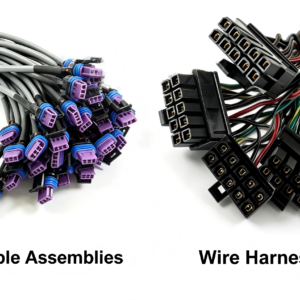
What is the difference between a wire harness and a cable assembly?
The terms are sometimes used interchangeably, but they can describe different configurations. A wire harness commonly refers to multiple wires or circuits organized and terminated into an assembly, while a cable assembly may consist of one or more cables with connectors or terminals. The exact terminology varies by industry and application.
How do I choose the right wire harness supplier?
Evaluate the supplier’s engineering capability, manufacturing equipment, crimping process, material control, electrical testing, quality system, traceability, production capacity, communication, and ability to support your required volumes. Price should be evaluated together with quality, reliability, lead time, and total cost of ownership.
What industries use custom wire harnesses?
Custom wire harnesses are used across automotive, electric vehicles, industrial automation, machinery, electronics, telecommunications, medical equipment, aerospace, energy systems, and many other applications requiring reliable electrical interconnections.
Conclusion: Building Reliability Into Every Wire Harness
A wire harness may be a relatively small component within a larger product, but its reliability can directly affect the performance of the entire electrical system.
The most common wire harness assembly problems are not limited to one manufacturing operation. They can originate from poor design, incorrect materials, improper crimping, inconsistent wire processing, incorrect routing, or insufficient testing.
The solution is a complete quality-control approach:
Design Correctly → Select the Right Materials → Control Wire Processing → Control Crimping → Assemble Correctly → Route and Protect Properly → Test Electrically → Inspect and Document
For OEMs and product manufacturers, selecting the right custom wire harness manufacturer is therefore an important engineering and supply-chain decision.
A capable supplier should do more than quote a piece price. The right partner should understand your technical requirements, identify potential manufacturing risks, maintain consistent processes, provide appropriate testing, and support your project from prototype through production.
If you are developing a new product or looking for a reliable supplier for an existing wire harness, XSD Harness can review your drawings, BOMs, wiring diagrams, samples, or technical specifications and evaluate the manufacturing requirements for your project.
Send your wire harness drawings or specifications to XSD Harness for a project review and quotation.