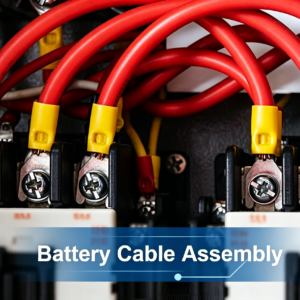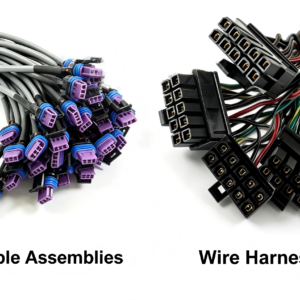

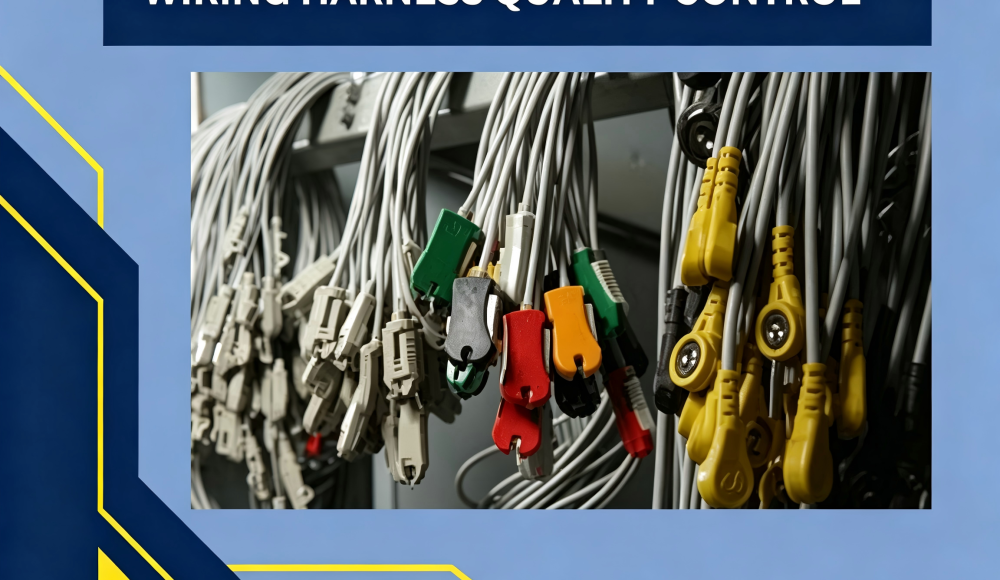
Wire harness quality control is the systematic process of inspecting materials, controlling manufacturing processes, verifying electrical and mechanical performance, and inspecting finished assemblies before shipment. Effective quality control helps prevent open circuits, short circuits, poor crimps, connector failures, insulation damage, and other defects that can lead to equipment downtime or field failures.
For OEMs and equipment manufacturers, choosing a wire harness supplier with a robust quality control system is therefore just as important as comparing unit prices.
This guide explains the key wire harness quality control processes, testing methods, common defects, applicable standards, and supplier evaluation criteria
What Is Wire Harness Quality Control?
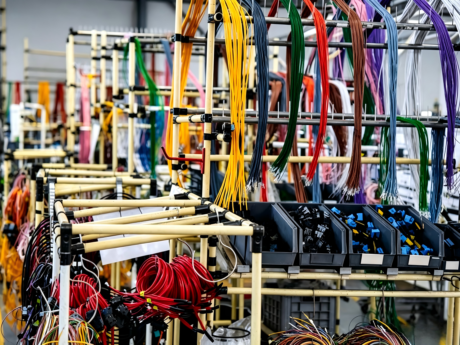
Wire harness quality control is the process of verifying that a harness meets the customer’s drawings, specifications, applicable standards, and functional requirements at every stage of manufacturing.
A professional wire harness QC system typically covers:
Incoming material inspection
Wire cutting and stripping inspection
Terminal and connector inspection
Crimping quality control
Assembly inspection
Electrical testing
Mechanical testing
Visual and dimensional inspection
Final inspection
Packaging and shipment inspection
The basic quality-control flow is:
Incoming Materials → Wire Processing → Crimping → Assembly → Electrical Testing → Final Inspection → Packaging
The key principle is to control quality throughout the manufacturing process rather than relying only on final inspection.
IPC/WHMA-A-620 specifically establishes requirements and acceptance criteria for cable and wire harness assemblies and emphasizes process control to achieve consistent manufacturing quality. (electronics.org)
Why Is Quality Control Important in Wire Harness Manufacturing?
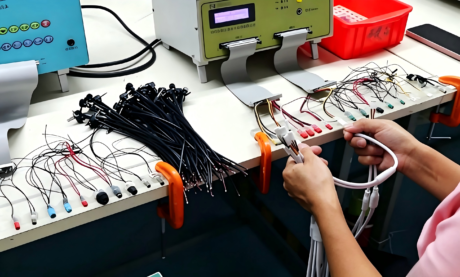
Wire harnesses often connect power, signals, sensors, motors, controllers, batteries, and other electrical components. A small manufacturing defect can therefore affect the performance of an entire system.
Electrical Reliability
Poor wire connections can cause:
Open circuits
Short circuits
Excessive electrical resistance
Intermittent connections
Insulation breakdown
Signal or power transmission problems
Mechanical Reliability
A poorly crimped or incorrectly assembled terminal can result in:
Terminal pull-out
Connector disengagement
Wire breakage
Loose connections
Vibration-related failures
Consistent Production Quality
Quality control is particularly important for medium- and high-volume production. A supplier must be able to manufacture hundreds, thousands, or millions of assemblies with consistent specifications.
For this reason, professional wire harness manufacturing relies on standardized processes, controlled production parameters, inspection procedures, testing equipment, and traceable quality records.
Wire Harness Quality Control Process
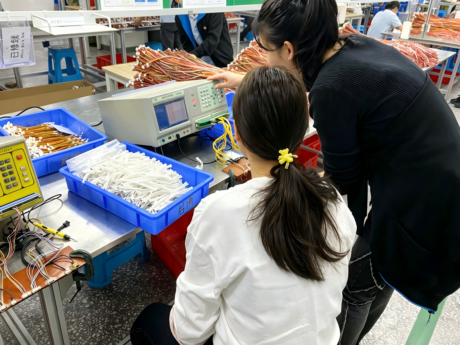
A robust wire harness quality control system begins before production starts.
1. Incoming Material Inspection
The first quality checkpoint is incoming inspection.
Depending on the project requirements, manufacturers may verify:
Wire type
Wire gauge
Insulation material
Wire color
Wire length
Terminal part number
Connector part number
Component dimensions
Material specifications
Labels and markings
Supplier documentation
Using the wrong terminal or wire specification can create a problem that cannot be corrected by final inspection alone.
For custom wire harness projects, approved drawings, BOMs, component part numbers, and customer specifications should therefore be clearly controlled before production.
2. Wire Cutting and Stripping Inspection
Wire processing directly affects subsequent crimping and assembly quality.
Important inspection points include:
Wire cutting length
Strip length
Conductor exposure
Insulation condition
Conductor damage
Cutting consistency
If too much insulation is removed, the exposed conductor may be insufficiently protected. If too little insulation is removed, the conductor may not be positioned correctly inside the terminal.
For high-volume production, controlled cutting and stripping parameters are essential for maintaining consistency.
3. Crimping Quality Control
Crimping is one of the most critical processes in wire harness manufacturing.
A crimped connection must provide both reliable electrical conductivity and sufficient mechanical strength.
Important crimp quality parameters can include:
Crimp height
Crimp width
Conductor position
Insulation support
Terminal deformation
Pull-out force
Conductor strands
Crimp consistency
A crimp can look acceptable visually but still have insufficient mechanical strength or poor electrical performance.
For this reason, professional manufacturers combine visual inspection, dimensional verification, process control, and mechanical testing where required.
IPC/WHMA-A-620 covers crimped, mechanically secured, and soldered interconnections and associated cable and harness assembly activities. (electronics.org)
4. Terminal and Connector Inspection
The correct wire and terminal are not enough. The terminal must also be correctly inserted into the connector.
Inspection may include:
Correct connector model
Correct terminal
Correct terminal position
Terminal insertion
Terminal retention
Connector locking
Connector orientation
Pin sequence
Secondary locking mechanisms
Incorrect terminal insertion can create an intermittent connection that may not be immediately visible during a basic visual inspection.
5. Wire Harness Assembly Inspection
During final assembly, technicians and inspectors should verify the harness against the approved drawing and work instructions.
Typical inspection points include:
Wire routing
Branch locations
Connector orientation
Terminal positions
Wire sequence
Labels
Clips
Sleeves
Heat shrink
Protective tubing
Tapes
Strain relief
For complex custom wire harnesses, assembly fixtures and visual work instructions can help reduce operator-related errors.
Wire Harness Testing Methods
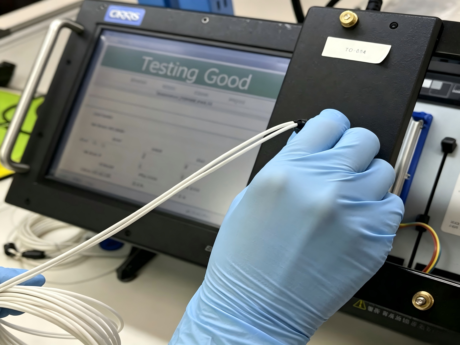
Electrical and mechanical testing provides objective evidence that a finished wire harness meets its functional requirements.
Continuity Testing
A continuity test verifies that the intended electrical paths are correctly connected.
It can identify problems such as:
Open circuits
Incorrect connections
Missing connections
Incorrect pin assignments
For multi-branch harnesses, automated continuity testers can significantly improve testing efficiency and repeatability.
Short-Circuit Testing
Short testing verifies that unintended electrical connections do not exist between specified circuits.
This is particularly important for complex harnesses containing multiple circuits and closely positioned terminals.
Hi-Pot Testing
A Hi-Pot test, or dielectric withstand test, evaluates the insulation system’s ability to withstand a specified electrical voltage without breakdown.
The exact test voltage, duration, and acceptance criteria should be defined according to the product specification and applicable requirements.
Hi-Pot testing is especially relevant when electrical safety and insulation performance are critical.
Insulation Resistance Testing
Insulation resistance testing evaluates the resistance between specified electrical conductors and/or between conductors and other specified points.
It can help identify insulation degradation or unwanted leakage paths.
The test conditions should be established according to the customer’s technical requirements and applicable product standards.
Crimp Pull Force Testing
A pull test evaluates the mechanical strength of a crimped wire-terminal connection.
It can help identify:
Insufficient crimping
Incorrect crimp parameters
Poor conductor positioning
Terminal deformation
Weak mechanical connections
For critical applications, pull-force requirements should be clearly defined during the engineering and quality planning stages.
Dimensional and Visual Inspection
Not every quality characteristic is electrical.
Final inspection can verify:
Overall harness length
Branch dimensions
Connector position
Wire routing
Label position
Component presence
Appearance
Insulation condition
Protective materials
The inspection method should be based on the drawing, customer specification, and applicable acceptance criteria.
Common Wire Harness Defects
Understanding common defects helps both manufacturers and buyers develop better quality control procedures.
| Common Defect | Possible Cause | Recommended QC Method |
| Incorrect wire length | Cutting setup error | Length inspection |
| Damaged insulation | Incorrect stripping or handling | Visual inspection |
| Poor crimp | Incorrect tooling or parameters | Crimp inspection + pull test |
| Loose terminal | Insufficient retention | Terminal retention test |
| Wrong connector | Component selection error | Part-number verification |
| Incorrect wire sequence | Assembly error | Visual + electrical test |
| Open circuit | Poor connection or missing terminal | Continuity test |
| Short circuit | Incorrect assembly or damaged insulation | Short-circuit test |
| Incorrect labeling | Assembly/documentation error | Final inspection |
| Missing component | Assembly error | BOM-based inspection |
| Connector not locked | Incorrect insertion | Visual/mechanical inspection |
A strong quality system should not only detect these defects but also identify their root causes and preventive actions.
Wire Harness Quality Standards and Certifications
The exact standards applicable to a wire harness depend on its application, customer requirements, market, and performance class.
IPC/WHMA-A-620
IPC/WHMA-A-620 is one of the key industry standards for cable and wire harness assemblies. It addresses materials, methods, tests, and acceptance criteria for cable and harness manufacturing. (electronics.org)
The standard also recognizes different product classes based on application and performance requirements, including general electronic products, dedicated-service products, and high-performance/harsh-environment products. (electronics.org)
This is important because quality requirements should be matched to the actual application rather than applying the same inspection criteria to every harness.
IATF 16949
For automotive supply chains, IATF 16949 is a major quality management framework.
Automotive customers may also impose customer-specific requirements and additional quality procedures. For example, the IATF organization publishes customer-specific requirements and references wire-harness-related CQI requirements within certain automotive programs. (国际汽车工作组)
ISO 9001
ISO 9001 provides a broader quality management framework and is commonly used by manufacturers to establish controlled processes, corrective actions, documentation, and continual improvement.
Other Requirements
Depending on the application, customers may also specify:
UL requirements
RoHS
REACH
Automotive requirements
Customer-specific specifications
Industry-specific testing requirements
For automotive applications, ISO also maintains standards addressing electrical connections for on-board vehicle wiring harnesses, including test methods and performance requirements for connector operation. (ISO)
The key point is that certification alone does not guarantee product quality. A qualified supplier should be able to demonstrate how its quality system is implemented on the production floor.
How a Professional Wire Harness Manufacturer Controls Quality
A professional manufacturer should treat quality control as an integrated production system.
A typical approach includes:
Incoming Quality Control
Verify materials and components against approved specifications before they enter production.
Process Quality Control
Monitor critical operations such as cutting, stripping, crimping, terminal insertion, soldering, and assembly.
Electrical Testing
Test finished harnesses according to the defined electrical requirements.
Final Inspection
Verify dimensions, appearance, component configuration, labeling, and other customer-specific requirements.
Documentation and Traceability
Maintain appropriate production and inspection records to support quality analysis and corrective action.
This approach is more reliable than simply inspecting finished products at the end of production.
Wire Harness Quality Control by Industry
Different applications require different quality priorities.
Automotive Wire Harnesses
Automotive applications typically place strong emphasis on:
Crimp reliability
Connector retention
Electrical performance
Traceability
Process consistency
Environmental durability
Medical Equipment
Medical equipment harnesses may require particular attention to:
Electrical safety
Consistent assembly
Traceability
Material requirements
Documentation
Industrial Equipment
Industrial harnesses often prioritize:
Mechanical durability
Connector reliability
Custom configurations
Long-term operating performance
Solar and Energy Storage
These applications may require careful consideration of:
Insulation
Current-carrying capability
Connector reliability
Environmental exposure
Cable protection
Robotics
Robotic applications can place additional emphasis on:
Flexibility
Repeated movement
Strain relief
Connector retention
Cable routing
The appropriate quality plan should therefore be developed around the actual operating environment and failure risks of the finished product.
How to Prevent Wire Harness Quality Problems
Effective quality control is not only about detecting defects. It is about preventing them.
Key practices include:
Use Controlled Engineering Documentation
Manufacturing should be based on approved drawings, BOMs, specifications, and work instructions.
Control Critical Process Parameters
Crimping, stripping, cutting, soldering, and other critical processes should have defined parameters and acceptance criteria.
Perform First-Piece Inspection
The first completed assembly can be inspected against the approved requirements before full production continues.
Conduct In-Process Inspection
Critical operations should be checked during production instead of relying entirely on final inspection.
Use Appropriate Electrical Testing
Continuity, short-circuit, Hi-Pot, insulation resistance, or other tests should be selected based on product requirements.
Calibrate and Maintain Equipment
Testing and production equipment must remain capable of producing reliable, repeatable results.
Train Production Personnel
Operators should understand the work instructions, quality requirements, and defect-prevention procedures relevant to their processes.
Analyze Root Causes
When defects occur, corrective action should address the underlying cause rather than simply repairing the defective product.
Frequently Asked Questions About Wire Harness Quality Control
What is wire harness quality control?
Wire harness quality control is the systematic inspection, testing, and process control used to ensure that wires, terminals, connectors, and finished harness assemblies meet defined electrical, mechanical, dimensional, and appearance requirements.
How do manufacturers test wire harnesses?
Manufacturers may use continuity testing, short-circuit testing, Hi-Pot testing, insulation resistance testing, pull-force testing, dimensional inspection, and visual inspection, depending on the harness design and customer requirements.
What are the most common wire harness defects?
Common defects include incorrect wire length, poor crimping, damaged insulation, incorrect terminals or connectors, incorrect wire sequence, open circuits, short circuits, loose terminals, and missing components.
How do you check wire crimp quality?
Crimp quality can be evaluated through visual inspection, dimensional measurements, process-parameter control, and mechanical pull testing where required. The specific acceptance criteria should follow the applicable drawing, specification, or industry standard.
What standards apply to wire harness manufacturing?
Applicable requirements vary by product and industry. IPC/WHMA-A-620 is a major standard for cable and wire harness assembly requirements and acceptance. Automotive projects may also involve IATF 16949, customer-specific requirements, and other automotive standards. (electronics.org)
Should every wire harness be electrically tested?
The appropriate testing method and test coverage depend on the product design, application, customer specification, risk level, and production requirements. A professional supplier should define the test plan based on these factors rather than applying a single test strategy to every harness.
How do I evaluate a wire harness supplier?
Evaluate the supplier’s quality management system, manufacturing capability, testing equipment, crimping processes, engineering support, traceability, certifications, documentation, production capacity, and experience with similar applications.
Choose a Wire Harness Manufacturer That Can Control Quality
Wire harness quality should be controlled from incoming materials to final shipment. Reliable production requires more than a final electrical test; it requires controlled engineering documents, qualified materials, stable manufacturing processes, appropriate inspection methods, and effective electrical and mechanical testing.
If you are developing a custom wire harness, send your drawings, BOM, wire specifications, connector/terminal part numbers, estimated quantity, and testing requirements to XSD Harness for evaluation.
Our engineering team can review your wire harness requirements, confirm manufacturability, recommend suitable production and testing methods, and provide a quotation based on your project specifications.